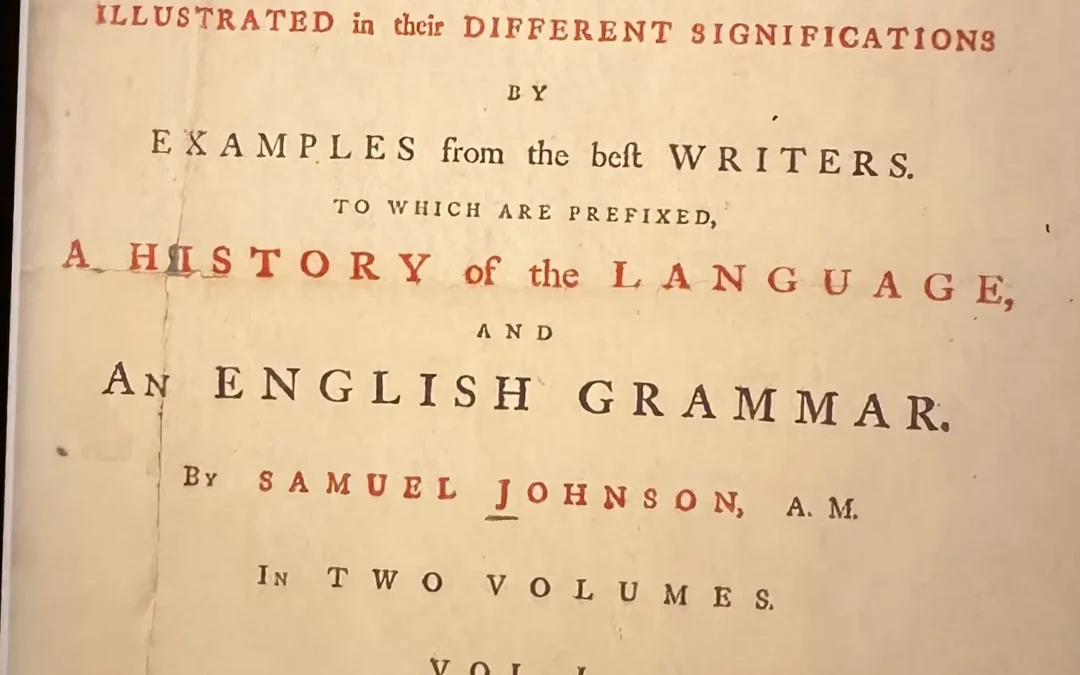
Polonius: What do you read, my lord?
Hamlet: Words, words, words.
Polonius: What is the matter, my lord?
Hamlet: Between who?
Polonius: I mean, the matter that you read, my lord.
(Hamlet, II,ii)
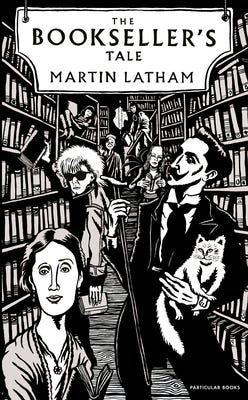
‘Comfort food’ like macaroni and cheese, chicken soup, and mashed potatoes with gravy are credited with acting as a tonic to relieve unhappiness, reminiscent as they are of a mother’s love recalled from childhood. Dr. Martin Latham’s recent book The Bookseller’s Tale similarly prescribes “comfort books” for the relief of the blues. He is not a medical doctor, and does not advise a visit to a pharmacy, but to your own bookshelf or the public library. His doctorate is in Indian history and he now makes his living as a bookseller. He would undoubtedly sell you many books if he could, from the Waterstones bookshop he has managed in Canterbury, England for over thirty years, yet he waxes lyrical about libraries: “It seems that browsing mindlessly is somehow browsing mindfully…. Browsing a library is to browsing online (jerked around by algorithms) what free climbing is to a coach tour.” He continues, “Whatever the library means to us, we hunger for it imaginatively…. We reach reflexively towards each other in imagination across oceans and across centuries. We feel more rounded in a library because we all harbour that ‘No man is an island’ feeling.” He adds, “The library is a dream of connectedness.” How wise this all is to those of us who value its role.
What kind of an Ironist are You?
‘Comfort books’ include those read in childhood, and re-read often. The old saying ‘familiarity breeds contempt’ does not apply, as re-reading a favourite book often yields insights to the older reader that were unsuspected by his younger reading self. Perhaps the truism should be amended to ‘familiarity breeds content.’ In a recent YouTube interview, Martin Latham lists several popular comfort books, among them fairy tales by the Brothers Grimm, Harper Lee’s To Kill a Mockingbird, St.-Exupery’s The Little Prince, L.M. Montgomery’s Anne of Green Gables, The Phantom Tollbooth, I Capture the Castle by Dodie Smith, Paulo Coelho’s The Alchemist, Stella Gibbons’ Cold Comfort Farm, P.G. Wodehouse’s Jeeves comedies, Nabokov’s Lolita, and Evelyn Waugh’s Brideshead Revisited, a novel he loves for the nostalgic lushness of its prose. His disparaging reference to ghost stories and romances as forgettable “beach reads” suggests these do not qualify as ‘comfort books,’ more likely to be abandoned in hotel rooms or even left at the beach itself. I take exception to Latham’s phrase because I read V.S. Naipaul’s outstanding first novel A House for Mr. Biswas on holiday in Cozumel steps away from sand and surf, and it was not a forgettable book at all, but the work of a gifted artist.

Reading and re-reading favourite books is good for the unquiet spirit. When you do so, says Latham, you “forget the world around you” to “become the story” and by a process of voluntary self-identification, one of the characters in the book. As Virginia Woolf has said, you “slip the carapace of self” and sail away from pressing daily concerns to re-discover pleasant memories of earlier imaginative travel enjoyed in years gone by. My own “comfort books” include The Lord of the Rings, the Winnie-the-Pooh books, and The Wind in the Willows, re-read to my own children, and simply due to years of classroom experience with Golding’s Lord of the Flies, Conrad’s Heart of Darkness, Hamlet, Macbeth, Fitzgerald’s The Great Gatsby, To Kill a Mockingbird and many others. A thoughtful Grade 9 student, now no doubt in his fifties, once asked me “Don’t you get bored of the same books year after year?” I replied, “Never, because while the books do not themselves change, the students do, in each class, year after year, and they, like you yourself, are the reason I do what I do, and you are never boring!”

But pride of place, I must admit, goes to the book I first read nearly 70 years ago: the russophile Arthur Ransome’s Old Peter’s Russian Tales, a compilation of traditional folk tales told by a grandfather to his grandchildren Vanya and Marusiya, among them the witch Baba Yaga, Ivan the Ninny, who was smarter than his brothers, and the devilish figure of Frost, who seeks to freeze the heart out of everyone he meets during the long Russian winter. I still have my childhood copy, worn and frayed, but still a treasured comfort book, full of memories.
Latham’s book is itself a good, even a riveting, read. The author has led a varied life, travelled widely, and has a light, agreeably welcome, often rambling, touch, marked by an enviable love of reading, a commendable sense of gentle humour, and his The Bookseller’s Tale is engagingly unpretentious, democratic in taste, and leavened with curious pieces of socio-cultural information gleaned from a life immersed in books and book-lore, and in personal encounters with writers, readers, critics, editors, and customers. Lacking both an index and end-notes, his book is thus unashamedly, even refreshingly, unacademic. I should let Dr. Latham have the last word, taken from the last thoughtful paragraphs in his chapter 8, entitled ‘Signs of Use’:
“Nothing lasts. Our frail idea of self morphs and shape shifts, then becomes a line on a death certificate and a few family anecdotes. This is both sobering and liberating. As Forster says of Aziz in A Passage to India, ‘yes, all that was true of him, but his essence was slain.’ Our essence might be more contained in a battered, perhaps annotated, comfort book than in our job title, or our position on a family tree.
“What if the layers of the societal self were burnt away, could some idea of our individuality live on in a book, if that book was written in, even cut and pasted with thoughts and cuttings?
“It is an intuitive idea, and indeed when interviewed about how he thought up The English Patient, Michael Ondaatje almost shamefacedly said he did not think it up, it just started with an image which flashed into his mind: a patient, unrecognizably burned in a desert plane crash, who cannot tell of his identity and so is outwardly without one, but who has managed to hold on to a book, Herodotus, heavily annotated.
“Let us DNA our books. One day they may be all we leave behind.”