The Ironist

Differing Perspectives

Running to Catch the Bus

Are you on the proverbial bus yet? Whether it’s the AI bus or just a good old TTC ride across Toronto, we all keep running to catch something. But the real question is: where are we headed?

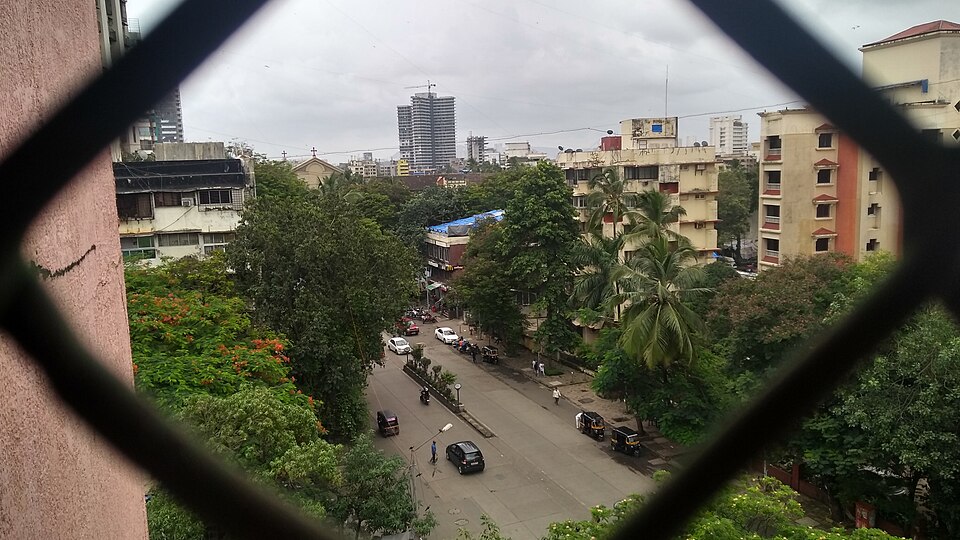
More than fifty years ago, I held a record for running fast in the City of Ottawa. I was naturally fast. It came handy in sports, for running from trouble (sometimes, I was a bit naughty), and it was fun. The other day, though, I ran to catch a bus. All I can say is I am glad the bus driver stopped for me. I must have looked awful, as the driver waited. As I thanked him (and the passengers!), in between gasps for air, all I could think was that I had done this before.

Not so long ago – in the 1990s – many sang of the hope of what the internet would give us. Knowledge was to be at our fingertips. The promise of access to the world for the have-nots was now real. People would connect globally, collaboration would increase, and information would foster a more democratic society. The World Wide Web, after all, was designed to facilitate the sharing of information between researchers. Citizens would engage with governments, which was going to be more accountable, of course. Yes, connect and get on the bus!

Twenty two years after Tim Berners-Lee invented the world wide web, Thomas Frey, the ‘futurist speaker’ and blogger, wrote of his disappointment at the failures of the promises of the world wide web:

  1. No one controls the Internet” – False!
  2. Borders don’t matter” – False!
  3. Information wants to be free” – False!
  4. Information from the many is better than information from the few” – It depends!
  5. First mover advantage” – Rarely!
  6. Disintermediation” – It depends!
  7. The radical transparency advantage” – False!
  8. People are basically good, so the fewer rules the better” – False


“I will readily admit to having gotten sucked into many of the false notions these early Internet gurus have proposed…while many of the original theories have proven delusional, new chapters in the rulebook are being written every day.”

Now, we know better. The search engines are controlled. The approved political propaganda, and carefully ‘bespoke’ advertisements based upon our private lives are forced upon us, while laws restrict what we can post and what we can see. We have less privacy, more misinformation, and more control from governments and corporations. Some might say joining a terrorist cell is easier.

And yet, this sense of unexpected failure is not willingly accepted. In fact, denial is the tantra.

And what do we have now?

Every day we are hounded to catch the Artificial Intelligence bus. In fact, it is worse than that – we are told to catch the golden future of the Unchecked AI bus! Welcome it! Let it do all for us!

On a daily basis, we are not only bombarded with why AI is so much smarter than we are, but we keep finding out new things that are, in fact, controlling and corralling us already. Only yesterday, for instance, I found out my CPAP machine has been tracking six of my vital signs – every night for the last eight years – and sending it to the vendor of the machine. I won’t tell you what your new car tells advertisers about your driving style and habits. And I promise you that you won’t be able to guess everything they track.
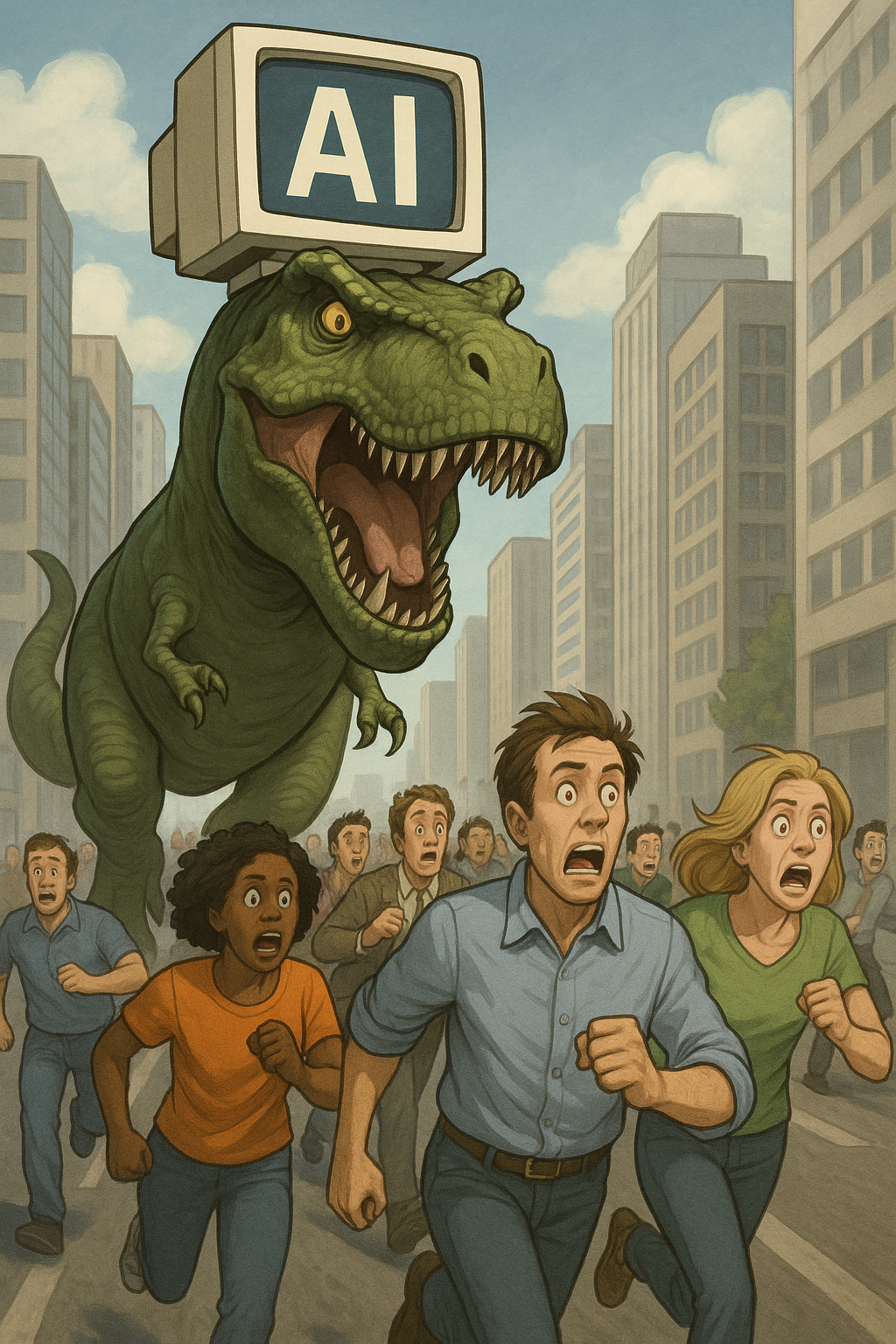
AI is, quite literally, a quantum step forward from the internet. Unchecked AI could control us all, and we will either obey….or else!

The solution?

The only hope is that we keep AI as a tool, and we remain the master, not AI, as we do the thinking. Let’s take a welding analogy for example. Suitable welding parameters must be evaluated. A welder will consult his charts, (or AI), but must make the final decision with his judgement, carefully weighing the boundary conditions. Boundary conditions contain a vast amount of scientific phenomena and are the constraints necessary for the solution. They are also differential equations. A differential equation defines a relationship between a quantity and its rate of change. If we lose the ability to determine the parameters ourselves, our boundaries will be fixed indeed. If we don’t know the boundary conditions, we will be shaped by another intelligence, and no longer be human.

Yes, I got a personal trainer to help me catch the bus. I’m not going to miss the show.

But I’m watching you, AI.

Contributed by

Nigel Scotchmer

Author

  • Nigel Scotchmer

    Nigel’s peripatetic path in life gives him, he believes, a unique perspective on the world around him. He has worked at many occupations over the years from driving a truck, writing welding standards, to being an international salesman,\ accountant and business owner. Brought up in a family that believed that Antigone in the Greek myth was correct to stand up and die for her belief that fairness and truth were more important than the ranting raves of the unthinking mob – his father accepted the consequences of refusing to fire a homosexual in the 1950s – Nigel believes irony is the greatest tool for both encouraging equity and our enjoyment of life. Since irony involves the interplay between emotions, reality and chance, its appreciation can provide meaning to the often inexplicable world in which we live. He said, when interviewed for this summary: “No, we can’t all be heroes, and too often we make the wrong choice, for the wrong reasons – but at least irony can bring peace to us by helping reconcile the warring elements.”

    Nigel loves literature – especially books and poems that deal with universal themes such as love, war, and justice – and is now happily retired from the world of business. Ironically, (like countless retirees before him!), he says he has the ambition to be a great writer and is currently writing fiction full-time….

    Visit him at https://nigelscotchmer.com/

More Irony

From San Blas to Oxford: A Review of Shooting Up

From San Blas to Oxford: A Review of Shooting Up

A missionary family raises four boys in one of Madrid's most drug-ravaged neighbourhoods. Jonathan Tepper's memoir traces an extraordinary journey. Jonathan Tepper’s Shooting Up is much more than the account of four brothers in a missionary family growing up in Spain...

The Celestial Bureaucracy: Hierarchies of Angels

The Celestial Bureaucracy: Hierarchies of Angels

In her third post, Dr. Hara tells us how Seraphim came to outrank Cherubim, and Archangels ended up near the bottom. In the previous essay, we traced the angel’s transformation from local guardian spirit to cosmic warrior under the influence of Zoroastrian dualism....

WORDS, WORDS, WORDS III

WORDS, WORDS, WORDS III

Polonius: What do you read, my lord? Hamlet: Words, words, words. Polonius: What is the matter, my lord? Hamlet: Between who? Polonius: I mean, the matter that you read, my lord. (Hamlet, II, ii) As part of The Ironist’s continuing series of articles on language and...

Guardians Before God: The Sumerian Origins of Angels

Guardians Before God: The Sumerian Origins of Angels

Dr Hara's research on the winged messengers of Western faith starts with these wingless creatures guarding Sumerian doorways. This is the story of angels and how they learned to fly... When we think of angels, we conjure images refined by centuries of Christian art:...

RAMBLINGS #10 – Goodbye Mt. Parnassos, Hello War

RAMBLINGS #10 – Goodbye Mt. Parnassos, Hello War

A drive down from myth-haunted Mt. Parnassus into the passes, graveyards, and battlefields Picture Credits: Edward Dodwell, Public domain, via Wikimedia Commons   It is said that Zeus, the great philanderer, lay with Mnemosyne (Memory), a Titan, for a marathon...

WORDS, WORDS, WORDS II: Inspiration

WORDS, WORDS, WORDS II: Inspiration

This is the second essay by Peter on the intricacies of the English language. Here, he writes on where inspiration comes from, and why no amount of effort can quite summon it. My first piece in the English language series talked about the quality of writing that...

The Last Puritan

The Last Puritan

Alexander Montgomery writes a fleeting, intimate glimpse of Glenn Gould, the genius and the strange solitude of his greatness. Glenn Gould’s sitting in Fran’s Deli, St. Clair East, and I sit here, watching him from the pub across the street. There he is, the bastard,...

The Awkward One: Rediscovering Mary Bennett

The Awkward One: Rediscovering Mary Bennett

About the most forgettable Bennet sister and a retelling of Pride and Prejudice... “There are few people whom I really love, and still fewer of whom I think well. The more I see of the world, the more am I dissatisfied with it; and every day confirms my belief of the...