“Carpe rutabaga folia!” – Horace, Odes 1.11
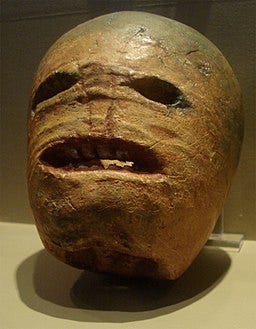
– rannṗáirtí anaiṫnid
(The cruel mocking of rutabagas by carving them into Jack O’Lanterns, practiced in Ireland and Scotland)
Rutabagas, and their cousins, white, red, and purple-top turnips, are a generous-hearted, kind and forgiving root vegetable. All have a sweet taste, especially if roasted or braised slowly. Their story is a sad one, and one that resonates today as a beacon of common sense and honesty so rare today in our current world of misinformation and manipulation by governments and big media.
Our hero, Rudolf Rutabaga, was a swede. Born in 1632, in Grönsaksstad,[1] in a labourer’s allotment, he nearly suffocated under the unremitting attacks of the monster Swedish weed, the honshirs, the bane of Swedish agriculture.[2] Never giving up, he persevered and fought for justice and honesty. Famed for escaping an early boiling pot, Rudolf rolled off a wagon on his way to market and landed in the baggage of a Hanseatic trader from Erfurt. His new owner, a Gemüseliebhaber,[3] was impressed with Rudolf’s spunk and enrolled him at the best school in Thüringen, the Ratsgymnasium.[4]

A contemporary dancer of the Rodent Ballet of Germany in Thüringen holding a rutabaga
A good education propelled Rudolf to become the Professor für Gemüse at Tübingen,[5] 1658 -1689, where he published how rutabagas have half the carbs, half the calories, and have four times the fibre of potatoes. With typical German attention to detail, he also patented the first food processor, the famous fußbetriebene Küchenmaschine[6], that showed how turnips whip and mash better than potatoes, too.
Potatoes had been brought to Europe in the 1550s by rich landowners attempting to exert more control over serfs by controlling their diet. Rudolf fought against these subtle attempts to exploit the poor. Reminiscent of today’s battle with AI, the wealthy sought to destroy the public’s awareness of their cultural identity, the very makeup of the country’s raison d’être. Ploughmen’s children, shoeless orphans of Worms, the scullery maids of Württemberg, all had their Latin Primers altered so that children were forced to study incorrect quotations such as “Carpe diem” (seize the day) instead of “Carpe rutabaga folia,” (seize the rutabaga by its green leaves), a ‘dumbing down’ of meaning, and even Julius Caesar’s book of salad recipes with its three types of anchovies (de bello Gallico), was altered with bland descriptions of Gaul, such as “Gallia est omnis divisa in partes tres.”[7]
On the surface, a bland vegetable with a higher crop yield seemed like a step forward. But like many things in life, the first consequences did not reveal their long-term effects. Early studies soon noted how the potatoes’ flatulence-creating powers[8] were increasing marital discord.[9] As well, people began to complain about the potatoes’ starchy tastelessness – especially compared to rutabagas.
It was Rudolf’s discovery of the famous Dormice and Fattened Snails Scroll which gave him the widespread following in the broadsheets of the day. This scroll had been written by disgruntled dormice and snails, the favourite food of the Roman Emperor Caligula (and indeed, of all Romans), who were upset they had not been made consuls as his horse had been. On the edge of the empire in Tübingen, the dormice and snails set up a cookery school to promote rutabagas and turnips as the ideal food, with their leafy tops, or “greens”, steamed or in salads, and that the tubers, both raw and cooked, were ideal for peasants, rulers and livestock. Other recipes describe how smaller, sweeter turnips can be sliced into wedges and eaten raw like an apple. Raw baby rutabagas can be sliced or diced and used in salads The mice and snails promoted blanching, and the use of balsamic vinegar from the Etruscan city of Mutina, modern day Modena, and olive oil from olives on the lower and more gentle slopes of Herculaneum, near Pompeii). If you look carefully at hazy glass in the picture below, you will see the subliminal message “manducare rutabaga non glires aut cocleae”.[10]
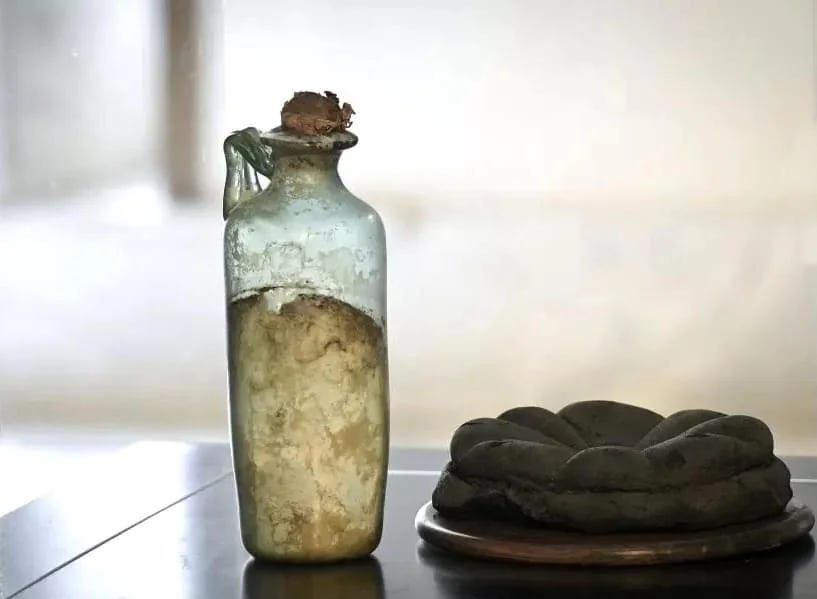
(The famous dormice olive oil from Tübingen, discovered in the ruins of Herculaneum in the 1970s)
It was thus at the height of his fame that Rudolf met his fate. As an “influencer” of the day, the Powers of Control (landlords, the King, his court) were aghast at his contrary opinions. Anyone criticizing potatoes was a threat to them. As a peacemaker and defender of individual rights and the family, Rudolf was against all forms of self-harm and mutilation. So when Rudolf pointed out potatoes are propagated by what is in effect cannibalism, (they can be cut up and planted to reproduce), which is akin to the cutting up of your mother and your children, planting them and eating them, (“seed” potatoes is a misnomer as reproduction is from tuber chunks cut from the mother potato), he was immediately arrested and peeled alive.
Thus ended the life of a Great Vegetable. Today, the corporations that control the farms of Idaho, Prince Edward Island, and the producer of the largest number of potatoes in the world, China, want you to forget the famous Greek poet Anacreon, who wrote in the 6th century BC (more or less):
‘Tis hard not to love a rutabaga
And hard as well to love,
But hardest of all to love and to lose.
contributed by Nigel Scotchmer, www.nigelscotchmer.com
[1] The famous “Vegetable City”. The name was changed to Stockholm to cover up the injustices done to rutabagas.
[2] See
, The Invasive Weeds Conference, Warwick University, 2022. Long-suffering rutabagas have been attacked by animals, vegetables and minerals since the beginning of time.
[3] Literally, “vegetable lover.” Akin to the modern concept of a vegetarian, but one who is more cognizant of the emotional and spiritual needs of vegetables, especially of the more intelligent, root variety.
[4] Forerunner of the Nagetierballett Deutschlands, the Rodent Ballet of Germany.
[5] Emeritus Professor of Vegetables at Tübingen, on the Nektar, the farthest boundary of the Roman Empire.
[6] Literally, foot-powered kitchen machine
[7] Originally, “Gallia habet triae generae anchovae.”
[8] Diderot viewed the potato as “windy.”
[9] Celebrated by Goethe in Gesang der Geister über den Wassern where the fart is the harbinger of the soul’s destiny. This is an explanstion of the hallowed German custom where the husband holds bedsheets over the bed while relieving intestinal pressure. (Women’s revenge is best captured by Wagner in the Ride of the Valkyries).
[10] Literally, “eat rutabagas not dormice or snails.”