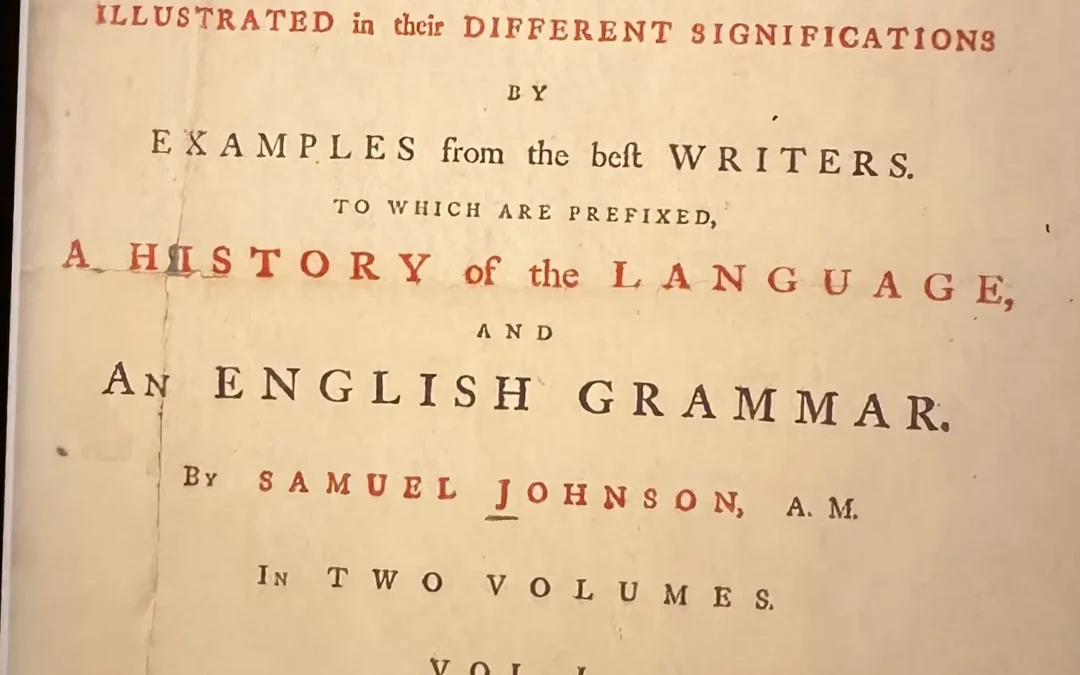
Polonius: What do you read, my lord?
Hamlet: Words, words, words.
Polonius: What is the matter, my lord?
Hamlet: Between who?
Polonius: I mean, the matter that you read, my lord.
What follows is a review of two outstanding recent books on the value of reading, which is essential to the development of writing. Each is one side of the gold coin that is effective communication, a skill a civilized society neglects at its peril.
Those who value a civil literate culture have for some time now expressed concern about threats to its continued existence. Enrolment in undergraduate humanities courses has dwindled. The quality of written and spoken English is increasingly characterized by carelessness, crudeness, and ignorance. Independent bookshops have closed, newspapers are in financial difficulties, the sensational or trivial ‘sound bite’ has replaced thoughtful discussion of public affairs, and strident ideologically-based activism has compromised serious debate in the public sphere. The joyful, life-affirming discoveries made by solitary readers far from the clamour of the madding crowd are being overlooked. Only still waters, we appear to have forgotten, run deep—and empty vessels, after all, make the most sound– or have we also forgotten these tried truisms?
What kind of an Ironist are You?
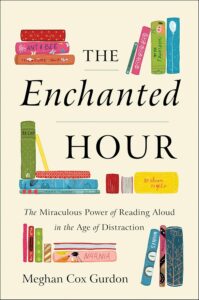
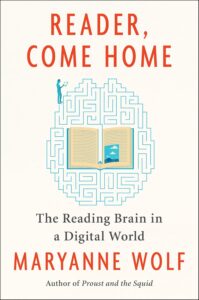
Two important books on reading draw attention to this state of affairs. Both Meghan Cox Gurdon in The Enchanted Hour: The Miraculous Power of Reading in the Age of Distraction (2019) and Maryanne Wolf in Reader, Come Home: The Reading Brain in a Digital World (2018) argue that the quiet enjoyment provided by reading is threatened by ‘distraction,’ by the intrusive effects of “digital dependency.”
Picture Credit: Amazon
Cellphones’ ring-tones, peremptory workplace-related e-mails, gossipy texting, the omnipresence of video, and the rants of anonymous uninformed contributors to ‘social media’ can all be combated, they insist, by reading that begins early, and is deep, wide, and critical. Social media have effectively, if unintentionally, legitimized the provocative diatribes of the proudly uncivil present occupant of the White House, himself, at least in part, a creation of the celebrity media culture he affects to despise and deplore. Maryanne Wolf quotes Barack Obama, a more literate and civil leader than his successor Trump, who worried that for too many young people information has become “a distraction, a diversion, a form of entertainment, rather than a means of emancipation.” Wolf also quotes Mark Edmundson, professor of English and author of Why Read? who laments that his students, “swimming in entertainment…have been sealed off from the chance to call everything they’ve valued into question, to look at new ways of life…. For them, education is knowing and lordly spectatorship, never the Socratic dialogue about how one ought to live one’s life.”
Long before they can read for themselves, children need to be read to, asserts Ms. Gurdon, a book critic, essayist, and former foreign correspondent. Those whose parents have read to them share a bond of intimacy with them that gives these children enormous advantages in school and later life. Reading aloud exposes the child to new vocabulary, exercises her imagination, encourages patience and listening skills, helps her to identify herself sympathetically with others, and improves her comprehension while she is beguiled by story. Reading aloud, Gurdon says, “furnishes the mind.” The following dialogue between my then four-year-old granddaughter and her mother is surely proof of the kind of sharing that empowers both child and parent:
Mum (reading): “Then Beast said to Beauty, ‘You may go anywhere in the castle except for the West Wing. That is forbidden.’”
Granddaughter (listening, spellbound): “Who is Bidden?”
Mum (after explanation, continuing): “The Beast fought the wolves fiercely and drove them away from Beauty.”
Granddaughter: “Like, drove them in a car?”
Ms. Gurdon goes to great lengths to demonstrate that classic children’s stories (her book contains a comprehensive list of these in her Notes) also provide moral lessons, cultural literacy, and the means to transform the lives of listeners and readers, moving examples of which she includes in a series of anecdotes. As for her sterling defence of the need to pass on to the next generation the treasures of our culture, she reminds her readers of Chairman Mao’s “Cultural Revolution” of the 1960s, during which “old ideas, old customs, old habits, and old culture” were unceremoniously ditched with catastrophic consequences for Chinese society. She is correctly dismissive of political correctness in all of its guises, providing quotations from Russell Baker, Ray Bradbury, and others in support of her view. The correct response to an ‘offensive’ passage in a work that is a product of its time, merely reflecting the era’s attitudes and values, she suggests, should not be moral outrage and cries for censorship, but an incentive to further reading. She is the mother of five children herself, and gives freely of her own experiences of reading to them over the years. Her tone is confident, cheerfully assertive, frequently humorous, and refreshingly optimistic. Her concern is primarily with reading aloud to children, but it is undeniable that the blind, the bedridden, reluctant English students, and the elderly can also benefit from listening to a book read aloud. Although she recommends audiobooks, especially for families on long car drives, she speaks only briefly of them. A more comprehensive view of the joys and benefits of listening to audiobooks voiced by skilled professionals can be found in an article by Ian Brown, Audiobooks Come of Age, which appeared in the Toronto Globe and Mail on Saturday, July 13, 2019.
Picture Credit: Amazon
According to a Yale study, people who read for pleasure live an average of two years longer than non-readers. One of the study’s authors maintains that literature “can promote empathy, social perception, and emotional intelligence,” cognitive processes that can lead to fuller, longer lives. Maryanne Wolf is in emphatic agreement with him on this last point.
Ms. Wolf, an academic perhaps better known as the author of Proust and the Squid, a study of how our brain learns to read, is primarily concerned in her most recent book with what she calls ‘deep reading,’ by which she means reading that makes us feel and think long after we have finished reading a memorable book, essay, poem, or passage. “Deep reading,” she continues, “is always about connection: connecting what we know to what we read, what we read to what we feel, what we feel to what we think, and how we think to how we live our lives in a connected world.” She fears a future ruled by distracting digital devices, and cites Patricia Greenfield in this regard: “Although… the Internet may develop impressive visual intelligence, the cost seems to be deep processing: mindful knowledge acquisition, inductive analysis, critical thinking, imagination, and reflection.” Digital dependency means that those deprived of their devices are easily bored. Even those who read on a Kindle are less proficient readers than those who read from an identical text in a book, as a European study cited has concluded. Attention spans today are already alarmingly short. Two-thirds of fourth-grade US children, Ms. Wolf reports, “do not read at a ‘proficient’ level, that is, fluently and with adequate comprehension.” What is called ‘skimming’ of e-mail, rather than careful, time-consuming analysis of content, is the “new normal” in the workplace. We are a hurried society, intent upon instant gratification, with little time for reverie and reflection, yet our survival as a species depends on our ability to ponder, to reflect, to imagine. No scientific discovery would ever have been made without the searcher’s first question: “What if…?”
There are three distinct and very real benefits to deep reading, asserts Ms. Wolf. These are increased empathy, reflection, and critical thinking. To C.S. Lewis, she reminds us, has been attributed the saying “We read to know that we are not alone.” E.M. Forster’s Howard’s End begins with the command “Only connect.” By sympathetic identification with others we meet in books, particularly with those who suffer, we make that connection, we share that suffering. We know we are not alone, and that we have a responsibility in life to engage with others. This is empathy or “compassionate imagination.” “When we read fiction,” the author tells us, “the brain actively simulates the consciousness of another person.…It allows us to try on…what it means to be another person.” We become Hamlet. We become Anna Karenina, Scout Finch, or Pooh Bear.
Reflection is the ability after reading a text to draw upon and add to what the reader already knows from earlier reading and life experience, to see it all with “a quiet eye,” in order to lead readers “even deeper into insights from the text or beyond them … to the invisible presence of the mind that reads behind, within, and between the words.” This of course assumes that we already have a storehouse of experience to build upon, and it is for this reason that Ms. Wolf advocates early and repeated immersion in the reading pool, so as to increase what she calls the “internalized knowledge” acquired by the reader herself on her own initiative. She recalls the time when reading opened up new horizons for her that were wider than the “two-room eight-grade schoolhouse” of her childhood in rural Eldorado, Illinois. There is a becoming humility in her recollections of how little she once knew, and how indebted she realizes she later became to what she read. It explains why she says that “the last thing” our society needs is “what Socrates feared: young people thinking they know the truth before they ever begin the arduous practice of searching for it.” A life of reflection is “one in which—whatever genre we are reading—we enter a totally invisible realm… where we can contemplate all manner of human existence and ponder a universe whose real mysteries dwarf any of our imagination.”
Critical thinking, the third benefit of deep reading, requires a skeptical reader to examine a writer’s words carefully and dispassionately for “manipulative” or “superficial” information. He must also be open to changing his own mind. Mark Edmundson, whom Wolf quotes, again approvingly, asks “What good is this power of critical thought if you do not yourself believe something and are not open to having these beliefs modified?” Too many young people, Edmundson says, lack any such belief system. Perhaps they have not read and reflected enough. Ms. Wolf warns that, as a result, “their ability to learn the kind of critical thinking necessary for deeper understanding can become stunted. Intellectual rudderlessness and adherence to a way of thought that allows no questions are threats to critical thinking in us all.” Jordan Peterson, author of the best-selling Twelve Rules for Life has repeatedly made the same point—but that is the subject for another review.
Sir Francis Bacon memorably wrote
“Some books are to be tasted, others to be swallowed, and some few to be chewed and digested.”
Popcorn is not nutritious enough to constitute a good diet. Entertaining but eminently forgettable romances or thrillers likewise lack nutrition, and are best swallowed whole. The two books reviewed here, however, are to be chewed and digested. If we have an appetite for thoughtful reading, they will satisfy our hunger for clarity, common sense, and insight. They are good for our digestion—and for our direction.