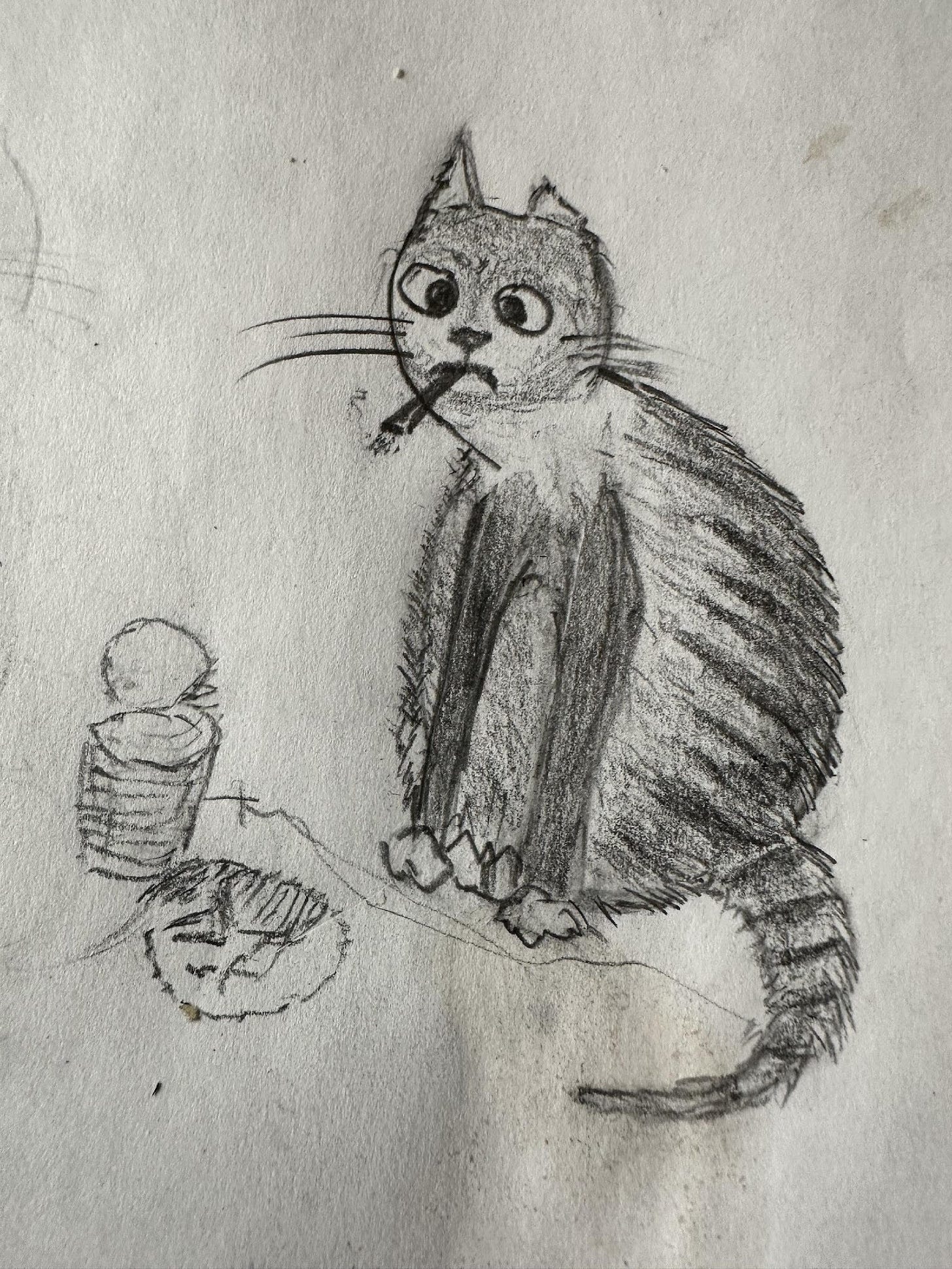
You ask me why I live in a dumpster? My friend, it’s my choice. Let me explain: The gods have everything and want nothing; you think you have nothing, and want everything. A cat is god-like as it wants little. Sure, I like fresh tuna – especially if someone else catches one for me. But the dumpster is a fine palace for me. Keep things as simple as you can.
We all have to live. But I choose the life to follow; I think for myself, I follow my own path. I do not care for the people who follow the popular road. These people will bend according to the wind. What sort of person enjoys doing what everyone else does? Is that life? Might as well be a robot, I say. And your life is simpler if you don’t have to worry about what other people are doing and saying.
And doing and saying are never the same. Orators and leaders say one thing and do something different – or nothing. There is a disconnect between action and words. There is no pursuit of virtue or a better life. Why chase a shadow? They lie every time. When will you learn?
What kind of an Ironist are You?
Why did the rich man throw me out of his house? He promised me fresh fish. But it smelled bad. Just like how they promise you status and money. So I told him it was rotten. Exile, he called it, when he threw me out. First, it isn’t exile if you realize it is freedom. If you accept the rotten fish – your status and money – what do you now owe him? It is still a smelly fish.
So, I like my dumpster. Second, he called me a cynic. I’m not a cynic. I object to being called a cynic. A cynic comes from the word cynikos, meaning ‘dog-like’, as in a dog fawning when given anything. A cat is a lion; cats do not fawn. The fat rich man wanted a slave. That’s not me. You want to be a dog?
I used to lie on his deck sunning myself, and he would come and stand over me and block my sun. It is nice to have the warm sun on my back. But it is ephemeral. The sun goes behind a cloud. You don’t aspire for the fleeting warmth of the sun. You seek something longer lasting. Like truth, and virtue. Don’t seek happiness; it is the wrong word. Happiness is too empty, too thoughtless.
You don’t want the ‘bones’ of the matter – that is what a dog chews on. A cat wants the marrow of the bone – the essence. Harder to get; so much more rewarding. I told him not to stand in the sun. I also told him he should strive to be more like me. He didn’t like that. My self-control makes me free. If I don’t want much, I am beholden less to others. I become more free. And I like being free. The rich man doesn’t want you to be free.
If I can, I ignore what I want. It is both philosophical and physical. It is true it can be a brutal simplicity.
I hiss at most rogues. That is the real reason I am not liked. Rogues do not like to be known as rogues. Rogues want people – or animals – who can spurn the obvious truth. They like dogs. Where I used to live, the rich man peed on his dog and the dog said, “Please do it again.” A dog is not a cat; a cat would not accept such treatment. I feel for the spineless dog. Where I live now, the garbage does not pretend to be anything but garbage.
The rich man’s children were OK. Besides giving me cuddles and tickles, children reveal the truth when they blush. When they lose that complexion, they are lost. I prefer to be away from the dishonest. Give me a child of a human any day over a grownup human. They like simplicity, too.
So you want a better life? Escape the prison they prepare for you – don’t accept the ‘happiness’ they offer you; it is not fulfilling. If you want to be fed, you must be hungry – and you must choose the food you eat to be satiated. Gorging does not make you happy. Pleasure leads to defeat. And too much pleasure dulls you anyway.
Instead, aspire for what you want – even if it is your own prison. Your own prison is far from a prison. You are the master of your own fate if it is your prison, anyway. You will find you need less, and that, paradoxically, less is, in fact, more. With a mind of your own, you will realize you are far from the prison. Your mind is free. And they cannot take that from you. You have found the truth.
And how do I know it is the truth? Truth cannot come from just agreeing with what you are told. You have to suffer. You suffer when you see the consequences of your actions. So it takes time to learn the truth. The actions of others do not tell you the truth as you never really know their reasons for their actions until you have to make the choice yourself. Then you have real happiness – and wisdom.
Now, I need one of my Tuna Smokes. Did you bring me my Tuna Smokes?
–
Contributed by
Nigel Scotchmer