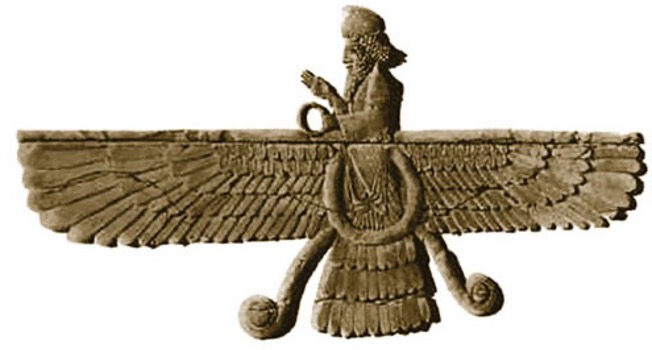
In this Forgotten Heroes story, Alfred Russel Wallace, flying whales called linanders, and a peace-making dish collide in an improbable history of the world’s most famous rice pan.

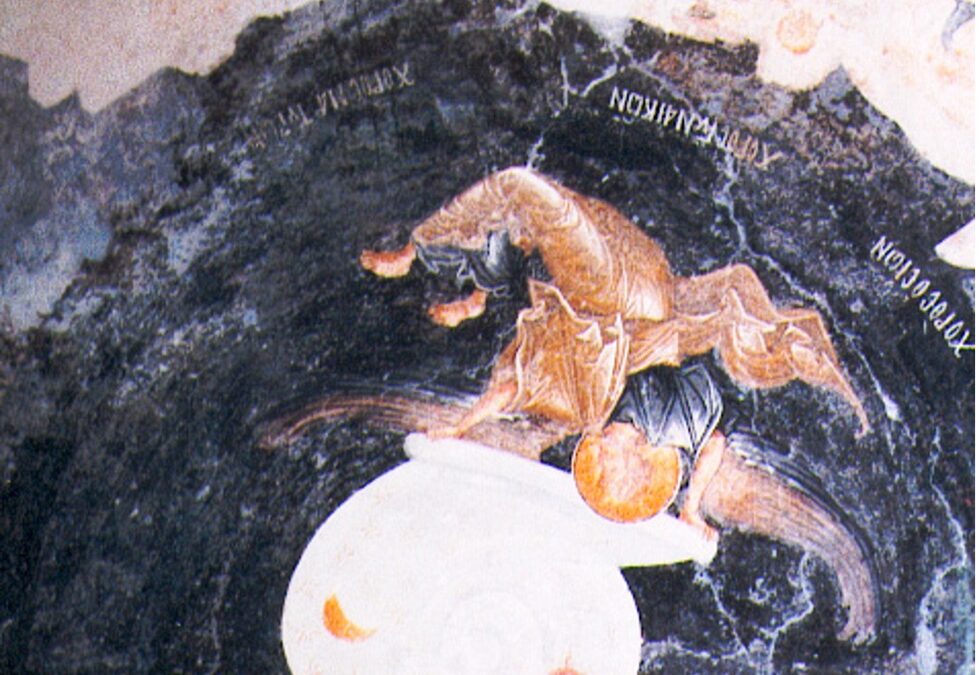
It is not surprising that few know the true origin of what is now considered to be a Spanish food from Valencia, the rice dish paella. Paella is usually fish-based and flavoured with saffron. Rice, fish, and saffron are the sacred trio of foods for linanders. Indeed, when you consider a linander has no arms, it is only natural they would develop a dish that is easy to prepare, and easy to eat directly from the dish in which it is cooked.
Some believe that Alfred Russell Wallace described the theory of evolution before Charles Darwin. In 1848, Wallace and his brother Herbert travelled up the Amazon to collect insects and botanical samples. Four years later, on his return journey to the UK (his brother had died of yellow fever), a fire destroyed the ship (and his botanical and insect collection), leaving him adrift in an open boat for ten days. It is at this time he met a linander, who told him of the mystical Sarawak mountains, near Kalimantan, Indonesia. Some less charitable individuals suggest Wallace had had a surfeit of the sun – which may, as well, have spurred his later interest in spiritualism. Wallace maintains the linander then saved his life by attracting the American whaling ship of Captain Ahab that rescued him, the famous Pequod.
On his return to England, Wallace immediately set out to find the home of that linander in Sarawak. What he documented came to be called the Wallace Line – the great divide between the bio- and zoo-geographical differences between the flora and fauna in Asia and Australia. (As everyone knows, kangaroos and other marsupials, eucalyptus trees, many Australian birds, etc. are not found in Asia). Sadly, he never saw another linander.
What kind of an Ironist are You?

This is where the Pauolus Paella the Peacemaker enters the picture. Nowadays, we learn about evolution in schools. We understand how the ventral fins of the sperm whale and of the great blue whale evolved, over aeons, into the great arching dorsal wings of the modern linander, or flying whale. A hundred and fifty years ago, the connexion between the rare and seldom observed linanders of the Himalayas and the common diving whales of the oceans had not been made. As well, the last two centuries have seen the preserves and breeding grounds of linanders greatly reduced. It is a thousand years since linanders visited the holy shrines of Mt. Santubong. To-day, linanders are rarely seen, seldom leaving their mountain retreats, delighting to dart in and out of the mists and clouds in the Pamir-Karakoram-Himalayan ranges.
Pauolos sought to reduce animosity between the species. Others will tell of his sacrifices and adventures. Here we will only describe the dish he invented to bring peace to the warring species along the Wallace Line. The one thing that all fauna do is to eat. He promoted a dish, a dish that all the species could eat. A dish that came to be named after him. Paella. A mixture of Asian rice, the world-famous Australian saffron of Alice Springs, and the food that we all eat, fruits of the sea. Combined together, like the oceans that encircle us all. Eaten in memory of the peace brought to the species by
Pauolos, the animal that sacrificed everything to give us peace in our time.
The secret of paella is the fish stock. For many, this is the unpleasant part of the preparation. Stock needs fish heads – but with eyes and gills removed, to lessen the bitterness. They are lightly boiled for less than an hour, with fish bones and white fish meat such as monkfish added. Oily fish such as salmon and mackerel are generally avoided. Froth and bones are then removed.
As flying whales cannot use narrow-necked drinking and eating dishes and cups, the fish stock is placed in a large, open pan (cast iron, if possible). Saffron is added to the stock; the more, the better. A rice that does not break down quickly is used. Bomba rice is the best although rice such as arborio can also be used. A more substantial rice absorbs the flavour and liquid better. Seafood, meat, sausages, and vegetables are then added to taste, in order of their cooking times.
Seafood examples are mussels, clams, shrimps, and prawns. Vegetables like tomatoes, peppers, onions, garlic, and peas. Meats, such as chicken, rabbit and sausages (a modern addition is the chorizo sausage from Basque country) are often added. The last trick is to avoid disturbing the rice as it cooks, maintaining a medium heat to develop a ‘socarrat’ on the bottom of the rice touching the pan. This browned rice adds taste, colour, texture, and a delightful crunchiness.
The Portuguese explorer Magellan brought the dish back to Spain in the 16th century. Hence, the modern misunderstanding of its origin.
In closing, we’ll mention a writer who not only extolled the virtues of paella, but also of Pauolos Paella’s peace-making activities. Joseph Conrad loved Wallace’s master work, The Malay Archipelago, and who wrote extensively about linanders, examples being Lord Pauolos, which explores redemption through the sacrifice of duty, and The Linander of the Narcissus, a book about the corrosive and pernicious role of self-interest in humanitarian aid.
The next time you eat paella, think of the grand sweep of history, the geography of the world, the interplay of animals and humans within it, and the magic of linanders, soaring above you.