The Peculiar Life of a Lonely Postman : Why This is a Must-Read Novella on Isolation and Imagination

Novella Review by Peter A. Scotchmer, featuring themes like literary fiction, loneliness, poetic novels, Canadian literature, escapist characters, modern novellas

A novella by the Quebecois writer Denis Theriault called Le Facteur Emotif in French was recently translated into English as The Peculiar Life of a Lonely Postman, and published in a handsome paperback edition in England, where it was hailed as “quirky and charming” by The Guardian, and chosen as noteworthy by BBC Radio 2’s Book Club. It is the second book written by its author, a screenwriter born on the north shore of the Gulf of St. Lawrence near Sept-Iles. He now lives in Montreal, the setting for this novella.
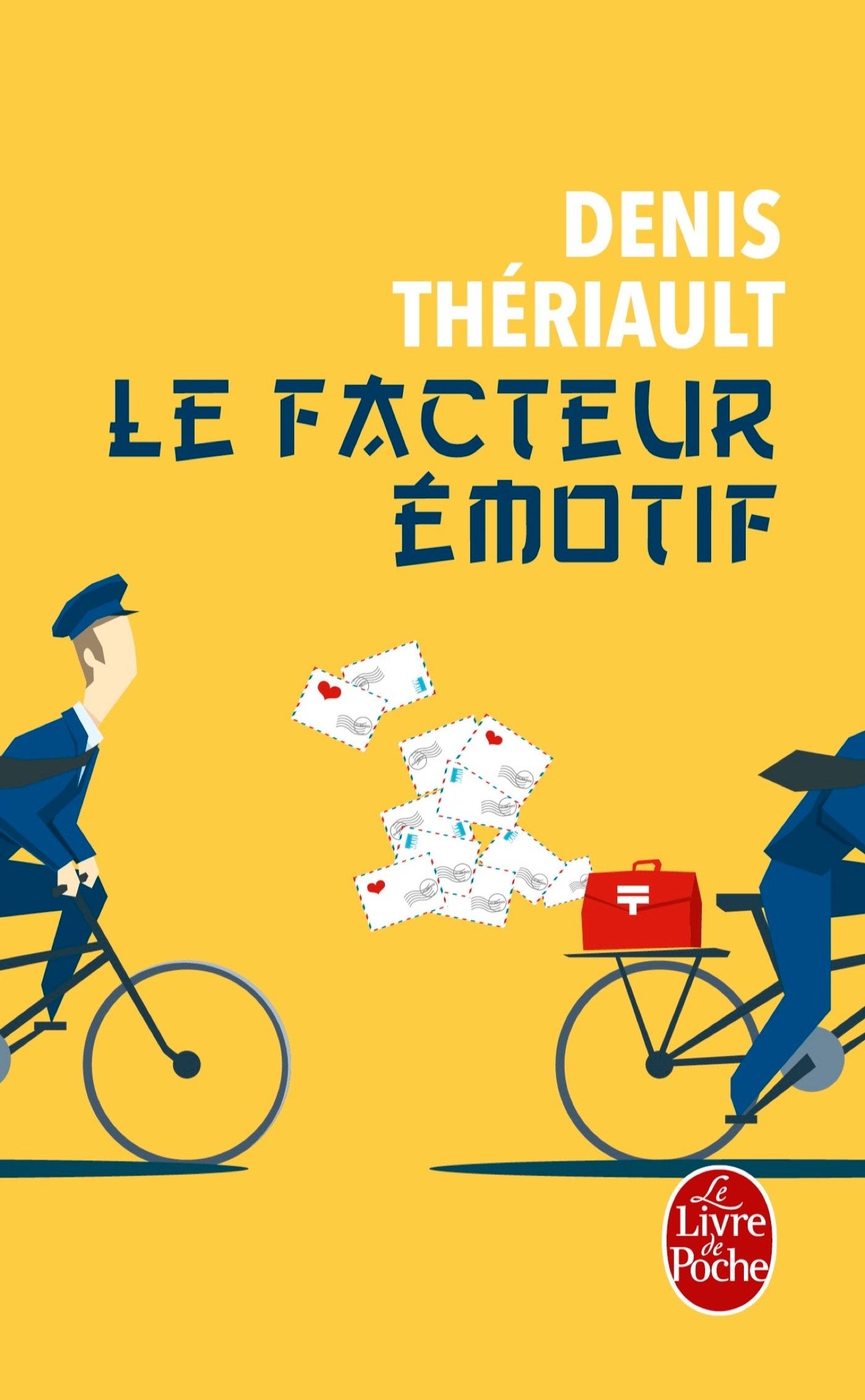
https://www.amazon.ca/-/fr/Facteur-%C3%A9motif-Denis-Theriault/dp/2253066184

The Peculiar Life of a Lonely Postman is a deceptively simple story of a solitary misfit, an eccentric romantic called Bilodo who practises calligraphy and is disenchanted with the banality and limited horizons of his postal delivery route and the sneers of his post office colleagues. He seeks an escape from his dissatisfaction by surreptitiously steaming open and reading the personal letters of those whose mail he is supposed to deliver, not read, living vicariously through his entrance into their private correspondence before belatedly delivering the letters to their addressees. He becomes fascinated by the letters sent by a beautiful young teacher living in the tropical paradise of Guadeloupe, to a certain Gaston Grandpre of Montreal, a correspondence consisting largely of haiku poetry, which the postman himself attempts to imitate. From this intrusion by Bilodo into their lives develops a series of catastrophic consequences. The story is short but convincing and profound in its implications, as it grapples, from its outset to its ingeniously apt ending, with its implied contrasts between reality and fantasy, between what is real and what is merely imagined, between the ephemeral and the eternal, the mundane and the poetic, the public and the private. The outcome is haunting.

In the figure of Bilodo the postman, M. Theriault provides echoes of the lives of other dreamers in literature, among them the unhappy young man in Willa Cather’s story “Paul’s Case,” Emma Bovary in Gustave Flaubert’s Madame Bovary, Jay Gatsby in Scott Fitzgerald’s The Great Gatsby, and Oscar Wilde’s Dorian Gray in the author’s famous The Picture of Dorian Gray. In fact, at a crucial point in the latter narrative, Dorian’s portrait fulfills an identical function to that of Bilodo’s mirror in Postman. Perhaps, even, by extension, Shakespeare’s “star-crossed” lovers of Romeo and Juliet can be said to pay the price of trusting in the perilous path of escapism, for Alice cannot live in Wonderland, nor can children remain in Narnia. Theriault’s gem of a novella belongs in the company of these literary forbears, and is richly deserving of readerly reflection.

Contributed by

Peter A. Scotchmer, Ottawa, April 17-18, 2025

Author

  • Peter A. Scotchmer is a retired high-school and English as a Second Language teacher and former department head of English. Born in London, England, he spent his childhood there and in Venezuela in the 1950s, emigrating with his family (including brother Nigel, above) to Canada in 1963. Educated in private schools and in the Ontario public school system, the possessor of an M.A. in English from Carleton University, he taught for 33 years in four Ottawa high schools, most recently at Canterbury High School for the arts. Since retirement, he has written some 70 short stories, essays and reviews for the on-line magazine Story Quilt, was a judge for five years for the Ottawa Public Library’s ‘Over 50’ Short Story Contest, has taught twice for the Ottawa School of Theology and Spirituality, and is the author of Comfortable Words, a short study of canonical works of literature. He continues to be a champion of wide and critical reading, close examination of text, precision in writing, and informed debate.

    Peter espouses the benefits of reading from his perspective as a writer, a classroom teacher, a father, and grandfather. Ideally, if we are read to as children, and are encouraged to read widely, wisely, and critically on our own in school and beyond, the advantages of a lifelong reading habit reveal themselves unconsciously in our speech, in our writing, and in our relations with others. We read for information, recreation, inspiration, and instruction. When we read, we each expand our vocabulary, exercise our imagination, develop empathy and compassion, share a vast human culture, and better understand the human condition and our place within it. We read, as C.S. Lewis said, “to know that we are not alone.”

    “Reading is self-improvement. It is “the love and resurrection of better minds, “says Rory Stewart, a contemporary academic, diplomat, travel writer and former soldier.

More Irony

The Little Tanagra: Part 2

The Little Tanagra: Part 2

Previously in Part 1, Hara writes about young Arsinoe growing into a woman of remarkable talents at the sanctuary of Artemis at Brauron. But longing for freedom, she begins to plan her escape.     Arsinoe took longer each day to return from her...

The Little Tanagra: Part 1

The Little Tanagra: Part 1

We are delighted to introduce a new serialized work of literary fiction from Dr. Hara Papatheodorou: a fairy tale that reimagines the origins of the celebrated Tanagra figurines in ancient Greece.   In the small village of Tanagra, in Boeotia, there lived a poor...

Starting in April 2026, The Ironist is starting a running monthly series of articles on the English language written by our very own contributor Peter Scotchmer, a retired English teacher. Polonius: ‘What is the matter you read, my lord?’ Hamlet: ‘Words, words,...

Skinny Legs and All: The Seriousness of the Absurd

Skinny Legs and All: The Seriousness of the Absurd

Talking objects, messy love, art, philosophy, and global conflict. All in one book. “In the haunted house of life, art is the only stair that doesn’t creak.” Over time I have come to believe that the higher the element of fantasy in a book, the more serious it often...

Utopian Delusions

Utopian Delusions

Peter Scotchmer writes about the enduring lure of utopia and why humanity’s attempts to build perfect societies so often end in dystopia.   I will not walk with your progressive apes, Erect and sapient. Before them gapes The dark abyss to which their progress...

Forgotten Heroes #8 – Pauolos Paella the Peacemaker

Forgotten Heroes #8 – Pauolos Paella the Peacemaker

In this Forgotten Heroes story, Alfred Russel Wallace, flying whales called linanders, and a peace-making dish collide in an improbable history of the world’s most famous rice pan.   Recently discovered petroglyph of a linander assisting ancient boy scouts...

Miscellaneous Ramblings #9 – Part 1, Recognizing Evil

Miscellaneous Ramblings #9 – Part 1, Recognizing Evil

“The line separating good and evil passes through every human heart.” Aleksandr Solzhenitsyn, The Gulag Archipelago I was in Budapest when I heard about the mass shooting at Tumbler Ridge, British Columbia. One of the worst things about this horror is how quickly it...

RETVRN to Casablanca

RETVRN to Casablanca

The inconvenient Liberalism of a "traditional" classic “I’ve often wondered why you don’t return to America.” When the French police chief says this to Rick, we learn he’s an exile. We never learn why, but we get hints of communist leanings. “You ran guns to Ethiopia....

The Reading Chair: Falling in Love with The Sirens of Titan

The Reading Chair: Falling in Love with The Sirens of Titan

…and the Joke That Explains Everything “A purpose of human life, no matter who is controlling it, is to love whoever is around to be loved.” Famous words by Malachi Constant, the man who gets rich by chance and ends up in space by chance, feels extraordinarily deeply...