The Art Thief

The Art Thief by Michael Finkel : A Book Review


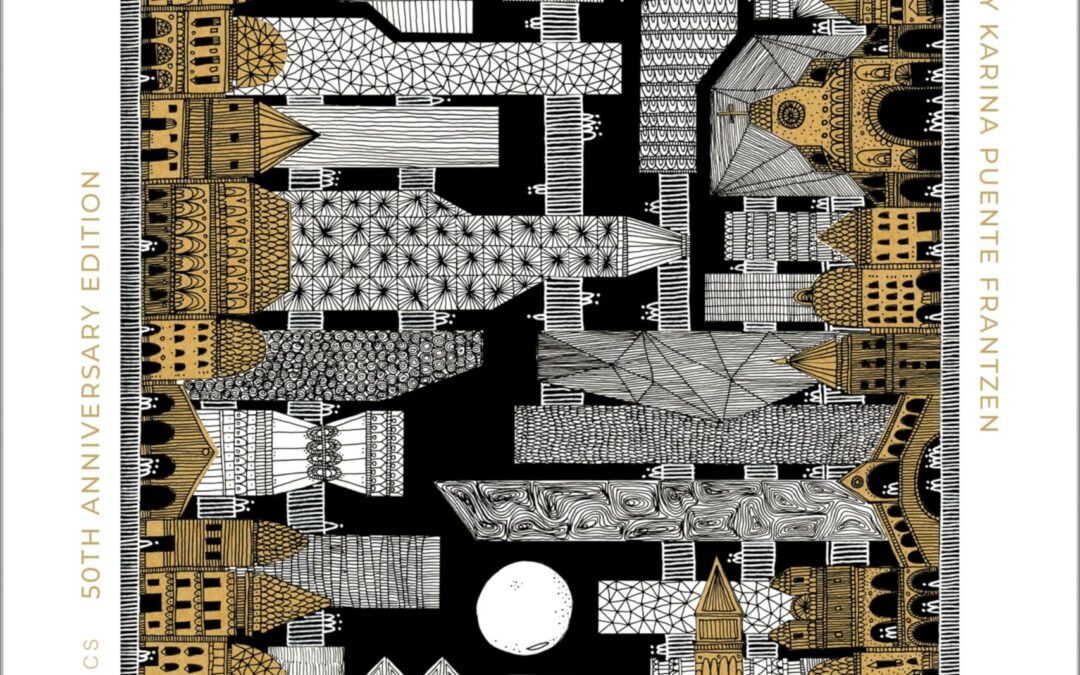
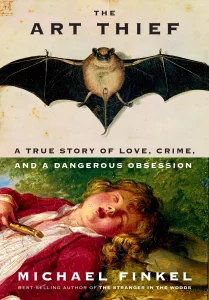
This year, 2023, has seen the publication of Michael Finkel’s The Art Thief, a riveting true account of the escapades of Stephane Breitwieser, a native of Alsace, and probably the most prolific art thief in history who, until he was caught, tried, and punished, stole art from museums in France, Belgium, and Switzerland, for the better part of a decade, with the active help of his girlfriend. He kept his ill-gotten hoard of art treasures, like Smaug the dragon in Tolkien’s The Hobbit, in his own cave, two rooms of an apartment in the attic of his mother’s house, entry to which she was apparently denied by her own son. In that secret hideaway was a treasure trove consisting of stolen oil paintings of the sixteenth and seventeenth centuries, tapestries, flintlock pistols, silver cups, bowls, chalices, a famous ivory statue of Adam embracing Eve in the Garden of Eden, and even a four-foot tall wooden statue of the Virgin Mary from a church, anything of value that took his fancy, in a haul alleged to have been valued at up to $2 billion. As an introduction to his narrative, Finkel provides the reader with an artist’s rendering in twin line drawings of the rooms’ probable contents, an art gallery of his very own.

The gripping story of this crime spree has been exhaustively researched over several years by its author, who interviewed police, art experts, and psychologists for his study, and provides in minute detail the modus operandi of the thief for many of his robberies, his success attributable in large measure to poor museum security and cunning sleight of hand on the part of the thief himself. When Breitwieser is finally caught, the story is far from over, for when police visit the house following his confession of guilt, its attic rooms are found to be empty.

Readers trying to make sense of what happened next must examine the motivation of the culprit or culprits who removed the contents while Breitwieser himself was in police custody, and come to terms with the sentences eventually handed down to those involved from the outset. Finkel maintains suspense throughout, yet one hostile reviewer has glibly dismissed his effort as productive of a “popcorn flick of a book” and the thief himself as unworthy of the attention extended him. Such a judgement does not do justice to the story or its author, nor does this same critic’s scornful claim that Finkel has sympathetically portrayed Breitwieser, despite his criminality, as a misunderstood “romantic hero.”

The truth is that Breitwieser is an enigma. Now in his sixties, he was bullied as a child, a social outcast who disliked parties, video games, and social media, preferring to seek solitary solace in  collecting stamps, coins, and old postcards. “I was the opposite of everyone” he says. He explained his love of Greek, Roman, and Egyptian artifacts by admitting “I took refuge in the past.” He was, says Finkel, “born in the wrong century.” An only child, his parents were distant from him, his rich father harsh and judgemental, and after he abandoned his family, divorce was inevitable. His mother, a nurse, was reduced to penury. She drew shocked comment when, years later, at her son’s trial, she publicly announced “I hate my son.” Breitwieser never worked steadily, only at menial jobs, and never for long, preferring to live off welfare benefits, generous gifts from his grandparents, and rent-free accommodation provided by his mother, who kept her distance from him. He was considered by several familiar with him as both immature and spoiled, yet his dysfunctional life began years before adulthood.

Breitwieser stole because he could. He wanted to surround himself with beauty, to “gorge himself on it.” He was an amateur devotee of aesthetics, the study of beauty, frequently feeling overcome with a “coup de coeur” whenever he saw beauty in a work of art, which he then longed to possess. He was also cunningly resourceful as a thief, with lightning-quick reflexes, and brazen charm, knowing how to obtain the object for himself.  He justified this compulsion by claiming that museums “imprisoned” art, while he “liberated” it. At no point did he appear to recognize that this is a profoundly selfish attitude, nor did he ever express remorse for his crimes or for the harm these caused. In fact, as Finkel himself observes, the story of art has been seen by some as “a story of stealing”: Greece still claims the Elgin Marbles in the British Museum were stolen; Napoleon helped himself to Egyptian antiquities in 1798.

This is not by any means to diminish the iniquity of Breitwieser’s thievery. Yet those who would dismiss Finkel’s book as merely a sensational potboiler should pay more attention to the author’s subtlety. He begins and ends his narrative with references to Georg Petel’s seventeenth-century ivory sculpture of Adam and Eve in the Garden of Eden, stolen from the Rubens House museum in Antwerp.

In Petel’s depiction of Adam and Eve, the couple is physically close enough to one another to touch, having eyes only for one another. They appear not to see the snake Satan entwined around the tree beside them. Intentionally or otherwise, the author, by way of the sculpture, reminds us of the perils of temptation that the Genesis story encapsulates for us. Disobedience to God’s commandments results in the expulsion of both Adam and Eve from the Garden of Eden, the loss of Paradise, the Fall of Man, and the coming of sin into the world. There, in his very bedroom, Petel’s sculpture itself was for years an unheeded warning to the unrepentant art thief as he gloated over and congratulated himself on his cleverness. The story behind the sculpture is profoundly moral, as is the inevitable fall of Breitwieser himself.

 After he had served his time, and become temporarily reconciled with his father, the hapless thief could not overcome the temptation to steal again, again, and again. He is compulsively addicted to his obsession to possess. He loses his father’s sympathy; his girlfriend no longer wants a part of him. He is arrested and jailed again and again, often for petty theft. The world loses its interest in his celebrity status, and he cannot be gainfully employed on account of his criminal record and recidivist status. He is loveless, friendless, alone, ruined. Too late has come self-knowledge. “I was a master of the universe,” he confesses. “Now I’m nothing.”

Author

  • Peter A. Scotchmer is a retired high-school and English as a Second Language teacher and former department head of English. Born in London, England, he spent his childhood there and in Venezuela in the 1950s, emigrating with his family (including brother Nigel, above) to Canada in 1963. Educated in private schools and in the Ontario public school system, the possessor of an M.A. in English from Carleton University, he taught for 33 years in four Ottawa high schools, most recently at Canterbury High School for the arts. Since retirement, he has written some 70 short stories, essays and reviews for the on-line magazine Story Quilt, was a judge for five years for the Ottawa Public Library’s ‘Over 50’ Short Story Contest, has taught twice for the Ottawa School of Theology and Spirituality, and is the author of Comfortable Words, a short study of canonical works of literature. He continues to be a champion of wide and critical reading, close examination of text, precision in writing, and informed debate. Peter espouses the benefits of reading from his perspective as a writer, a classroom teacher, a father, and grandfather. Ideally, if we are read to as children, and are encouraged to read widely, wisely, and critically on our own in school and beyond, the advantages of a lifelong reading habit reveal themselves unconsciously in our speech, in our writing, and in our relations with others. We read for information, recreation, inspiration, and instruction. When we read, we each expand our vocabulary, exercise our imagination, develop empathy and compassion, share a vast human culture, and better understand the human condition and our place within it. We read, as C.S. Lewis said, “to know that we are not alone.” “Reading is self-improvement. It is “the love and resurrection of better minds, “says Rory Stewart, a contemporary academic, diplomat, travel writer and former soldier.
More Irony

Miscellaneous Ramblings #9 – Part 1, Recognizing Evil

Miscellaneous Ramblings #9 – Part 1, Recognizing Evil

“The line separating good and evil passes through every human heart.” Aleksandr Solzhenitsyn, The Gulag Archipelago I was in Budapest when I heard about the mass shooting at Tumbler Ridge, British Columbia. One of the worst things about this horror is how quickly it...

RETVRN to Casablanca

RETVRN to Casablanca

The inconvenient Liberalism of a "traditional" classic “I’ve often wondered why you don’t return to America.” When the French police chief says this to Rick, we learn he’s an exile. We never learn why, but we get hints of communist leanings. “You ran guns to Ethiopia....

The Reading Chair: Falling in Love with The Sirens of Titan

The Reading Chair: Falling in Love with The Sirens of Titan

…and the Joke That Explains Everything “A purpose of human life, no matter who is controlling it, is to love whoever is around to be loved.” Famous words by Malachi Constant, the man who gets rich by chance and ends up in space by chance, feels extraordinarily deeply...

The Zambian Dream

The Zambian Dream

Kachingo Sondo is a corresponding freelancer originally from a village outside of Garampande, near Livingstone, Zambia. Zambian village, by Tom Chiponge, Pixaby Call me Phiri. I drive a taxi in Lusaka. That is, when I have money, I rent a taxi to try and make more...

Air: The Fourth Elemental Ironist

Air: The Fourth Elemental Ironist

The final one in the Ironist series - air - the silent carrier of truth, lies, and everything in between. Today, we conclude the Ironist series on the fourth element - air. Invisible, omnipresent, and so essential. Moving through us without fanfare. We inhale it,...

The Angel of the Archive: The Synod of the Left Shoe

The Angel of the Archive: The Synod of the Left Shoe

Jonathan Bennet talks about surefooted stances in the world of shoes and the not-so-surefooted stances of those who argue about them. Among the lesser church councils of the thirteenth century—those trivial, haphazard regional gatherings of abbots and prelates...

Earth: The Third Elemental Ironist

Earth: The Third Elemental Ironist

Welcome back to the Ironist series. Today, we delve into the third ironist – the earth, humble but powerful. Having absorbed human ambitions with geological patience, it has witnessed empires crumble to dust, ideologies sink into nothingness and kingdoms pass like...

The Irony Club

The Irony Club

Can't get enough of irony, can we? So, we created a club. Welcome one and all! We would like to thank you for subscribing to The Ironist and for your kind encouragement over the past two years. It has meant more to us than we can easily say. As a result, we have some...

Say Not, “the Struggle Nought Availeth.”

Say Not, “the Struggle Nought Availeth.”

The new year is here... As the year turns, I find myself thinking about what we carry forward and what truly matters. The grand sweep of The Lord of the Rings enthralled me in high school. I had read it two or three times by the time I reached university. It was the...