Seeking the BetterLife™: Exercise Choice with the Secret Joy of Irony

We Poets in our youth begin in gladness;

But thereof come in the end despondency and madness – Wordsworth, Independence and Resolution, Stanza VII

Children prove we all seek a better life. They quickly learn that walking helps them . They learn that talking gets them more. They watch their surroundings; they seek, follow and copy a mentor. And as they learn and grow, they begin to choose.

Likewise, as adults, we choose. There are times when we coast, ignoring the world around us. At other times, we are upset by what we read or hear, whether it be the lies of governments or injustices inflicted upon the innocent – and we seek to do something about it. We choose.

What kind of an Ironist are You?

Take the quiz and find out.

Do we know why we make these choices? Maybe, maybe not. As we age, though, we all realize that we cannot do everything we want and that, eventually, our choices are irrelevant and forgotten.

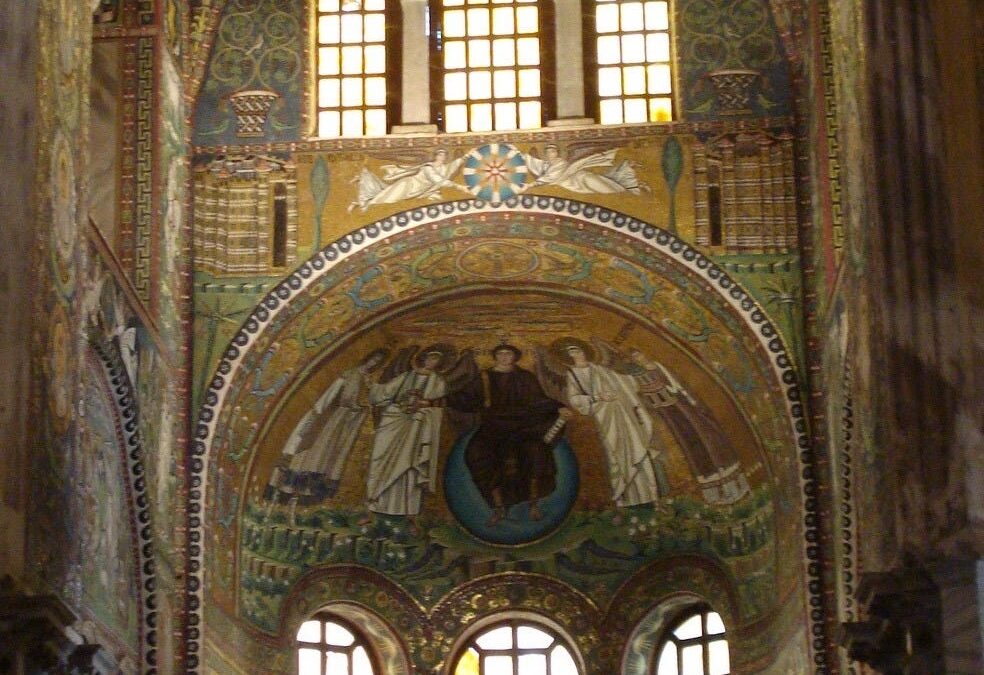
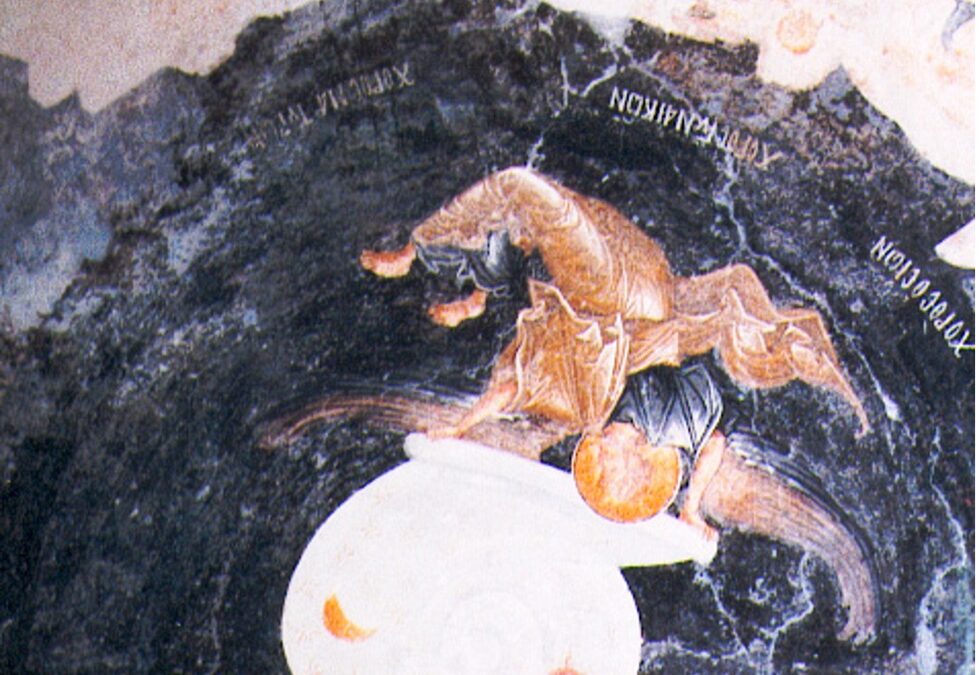
At the end of Matthew Arnold’s Empedocles on Etna, the philosopher, weary of life, chooses to throw himself down into the “vomiting flames and smoke” of Mt. Etna. As he dies, Callicles, the harpist sent to calm him, sings a song with the promise of the power of poetry, and it is carried up to Mount Olympus to the gods by the “rushing smoke-bursts” of red flame. It’s a powerful scene. We are left thinking that while life is transitory and tragic, it possesses the possibility of creating great and lasting art. There can be purpose. On another level, we are left wondering if we are hearing in Empedocles’ suicide Matthew Arnold’s own corrosion of faith, as expressed in his personal life and in poems like Dover Beach. Art is imitating life.

Empedocles on Etna by Matthew Arnold

Speaking of choice, Hamlet struggles whether to act when he is confronted with “the slings and arrows of outrageous fortune.” Indeed, in Hamlet, we may even underestimate the ghost of Hamlet’s father. The spectre may indeed know his son well and may enjoy the fact that his indecisive son is brooding and worrying Claudius by his gloomy and threatening presence. This would be a satisfying revenge for the ghost. Or is it Shakespeare that is aware of Hamlet’s distracted mind? So perhaps it is not really Hamlet waiting, but Shakespeare who delays? Yet Hamlet has indeed changed; Ophelia thinks he has…poets reach a little beyond themselves – great ones, very far.

This is irony. Irony is a different perspective. Charles Williams, a member in the Inklings with C.S. Lewis and Tolkien, said it was the ironist who realized the tragic nature or life and yet could find joy and humour in it – that irony is a powerful tool to deal with life’s challenges. My friend Reid Nelson Wightman noted how this description by Williams, in effect, meant the joke had been on him all his life – and the response was to be free and delighted. Williams even called that man that could do this the “defeated ironist.” That’s clever.

The Inklings…


The Greeks said, “Know thyself”. But can you, really? Perhaps not, but irony can help give you a better life. Art assists experience. Art provides images. Poetry, as an art, teaches and delights. It leads to a better place. To understand the poet (or your life, or other people) you need to understand what the poet does – the different angles you need to consider.

In a sense, you must become a different person. We are separating ourselves from ourselves. We are growing, learning, understanding another perspective. We transcend what we were – in a sense there is “a willing suspension of disbelief”. We consider views outside of ourselves – and thus we look back, see ourselves, and know ourselves better. Irony is a tool to better yourself.

When you are a poet, you are not the poem or the poet in the poem. You are removed. You are trying to be the poet. This is someone you are not. You are someone else. We are less of the poet and more of the work. We began above with a quotation from Wordsworth’s Independence and Resolution, and the poem ends after he meets an old and poor leech-gatherer who teaches him “…human strength, by apt admonishment”. We learn when we choose irony.

And the same can be said of you, my friend, as you go about your daily life. Yes, Ruth, you can escape the sad heart, sick for home, standing amid the alien corn. With a wee little dose of irony.

Contributed by

Nigel Scotchmer

Author

  • Nigel Scotchmer

    Nigel’s peripatetic path in life gives him, he believes, a unique perspective on the world around him. He has worked at many occupations over the years from driving a truck, writing welding standards, to being an international salesman,\ accountant and business owner. Brought up in a family that believed that Antigone in the Greek myth was correct to stand up and die for her belief that fairness and truth were more important than the ranting raves of the unthinking mob – his father accepted the consequences of refusing to fire a homosexual in the 1950s – Nigel believes irony is the greatest tool for both encouraging equity and our enjoyment of life. Since irony involves the interplay between emotions, reality and chance, its appreciation can provide meaning to the often inexplicable world in which we live. He said, when interviewed for this summary: “No, we can’t all be heroes, and too often we make the wrong choice, for the wrong reasons – but at least irony can bring peace to us by helping reconcile the warring elements.”

    Nigel loves literature – especially books and poems that deal with universal themes such as love, war, and justice – and is now happily retired from the world of business. Ironically, (like countless retirees before him!), he says he has the ambition to be a great writer and is currently writing fiction full-time….

    Visit him at https://nigelscotchmer.com/

More Irony

The Little Tanagra: Part 2

The Little Tanagra: Part 2

Previously in Part 1, Hara writes about young Arsinoe growing into a woman of remarkable talents at the sanctuary of Artemis at Brauron. But longing for freedom, she begins to plan her escape.     Arsinoe took longer each day to return from her...

The Little Tanagra: Part 1

The Little Tanagra: Part 1

We are delighted to introduce a new serialized work of literary fiction from Dr. Hara Papatheodorou: a fairy tale that reimagines the origins of the celebrated Tanagra figurines in ancient Greece.   In the small village of Tanagra, in Boeotia, there lived a poor...

Starting in April 2026, The Ironist is starting a running monthly series of articles on the English language written by our very own contributor Peter Scotchmer, a retired English teacher. Polonius: ‘What is the matter you read, my lord?’ Hamlet: ‘Words, words,...

Skinny Legs and All: The Seriousness of the Absurd

Skinny Legs and All: The Seriousness of the Absurd

Talking objects, messy love, art, philosophy, and global conflict. All in one book. “In the haunted house of life, art is the only stair that doesn’t creak.” Over time I have come to believe that the higher the element of fantasy in a book, the more serious it often...

Utopian Delusions

Utopian Delusions

Peter Scotchmer writes about the enduring lure of utopia and why humanity’s attempts to build perfect societies so often end in dystopia.   I will not walk with your progressive apes, Erect and sapient. Before them gapes The dark abyss to which their progress...

Forgotten Heroes #8 – Pauolos Paella the Peacemaker

Forgotten Heroes #8 – Pauolos Paella the Peacemaker

In this Forgotten Heroes story, Alfred Russel Wallace, flying whales called linanders, and a peace-making dish collide in an improbable history of the world’s most famous rice pan.   Recently discovered petroglyph of a linander assisting ancient boy scouts...

Miscellaneous Ramblings #9 – Part 1, Recognizing Evil

Miscellaneous Ramblings #9 – Part 1, Recognizing Evil

“The line separating good and evil passes through every human heart.” Aleksandr Solzhenitsyn, The Gulag Archipelago I was in Budapest when I heard about the mass shooting at Tumbler Ridge, British Columbia. One of the worst things about this horror is how quickly it...

RETVRN to Casablanca

RETVRN to Casablanca

The inconvenient Liberalism of a "traditional" classic “I’ve often wondered why you don’t return to America.” When the French police chief says this to Rick, we learn he’s an exile. We never learn why, but we get hints of communist leanings. “You ran guns to Ethiopia....

The Reading Chair: Falling in Love with The Sirens of Titan

The Reading Chair: Falling in Love with The Sirens of Titan

…and the Joke That Explains Everything “A purpose of human life, no matter who is controlling it, is to love whoever is around to be loved.” Famous words by Malachi Constant, the man who gets rich by chance and ends up in space by chance, feels extraordinarily deeply...