…and the Joke That Explains Everything
“A purpose of human life, no matter who is controlling it, is to love whoever is around to be loved.”
Famous words by Malachi Constant, the man who gets rich by chance and ends up in space by chance, feels extraordinarily deeply and doesn’t understand systems. Know anyone like that?
What kind of an Ironist are You?
Due to the Valentine’s Day love shebang, I was on a Kurt Vonnegut diet the past week and Malachi Constant is a protagonist in Vonnegut’s second novel The Sirens of Titan. For those who haven’t read the book, it lies in the comic science fiction genre. Yes, exactly like love and romance.
So, I was trying to find my chrono-synclastic infundibulum – one of those places mentioned in the book where all the different kinds of truths fit together, when I read about the other protagonist in the book who makes predictions that come true (handy talent, isn’t it!).
It gets really romantic as this person named Winston Niles Rumfoord and his dog Kazak crash their spaceship and unknowingly, enter the infundibulum, turning into wave phenomena (maybe a quick revision of quantum mechanics needed). Then they start living on this spirally thing from the Sun to the Betelgeuse with them periodically materializing on the Earth. And that is not the only best part about being in a chrono-synclastic infundibulum. The best part is that he can now see both the past and the future, and thus, comes up with wise sayings like-
“Everything that ever has been always will be, and everything that ever will be always has been…”
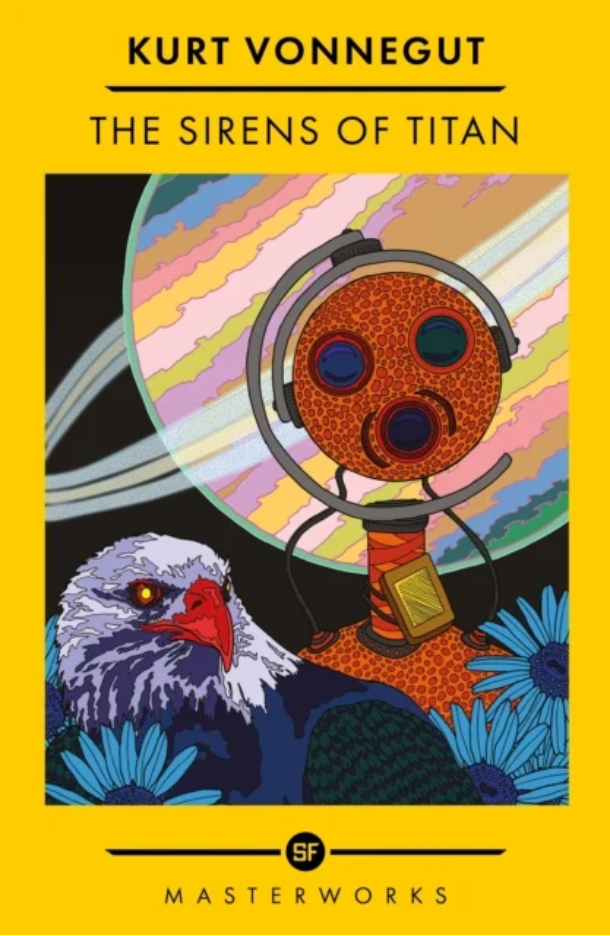
Photo by Adam Bouse on Unsplash
No scifi novel is complete without intergalactic wars, hence, we have here the war between Earth and Mars (also predicted and if I may say, without giving too many spoilers, orchestrated) where we have unsuspecting conscriptions into the Martian army with the Earthian soldiers having their memories conveniently erased. In between all the very realistic events that unfold, our protagonists escape to Saturn’s moon – Titan, which is where we discover the secret to the history of the human civilization. And that’s my favorite part of the book.
Naturally, there is a robot alien from another galaxy involved along with his stranded spaceship powered by UWTB or the Universal Will to Become (the kind of fuel that has the potential to solve the earth’s problems) and…yes…Stonehenge, and the Great Wall of China and even the Taj Mahal!
So, when Rumfoord’s stranded alien-friend sends out a cry for help to his planet Tralfamadore, the response unfolds on a scale so outrageous that it reframes human civilization itself.
So much about life’s meaning. Comic science fiction at its purest.
Picture Credit: shakespeareandcompany.com
In The Sirens of Titan, Vonnegut is delightfully absurd, marrying mysticism with technology and effectively divorcing the reader from reality. I enjoyed the way he gave a new meaning to humans’ lack of agency, making the reader feel like they don’t need to struggle against forces they can’t control because the universe will nudge them on anyway in the direction they are destined to go.
What Tolstoy also probed in War and Peace through thousands of pages of suffering and grief the uneasy coexistence of free will and destiny (no offence to Tolstoy), Vonnegut compressed into a joke. Needless to say, I liked Vonnegut’s crazy version more.
And yet the novel is not nihilistic.
His creation myth for a post-war post-meaning world gives the universe a personality, making the reader feel that the universe wants so deeply that its wants powered spaceships, human civilization, and cosmic realities.
He has dealt with free will, inflation, love, friendship and meaning (but, of course!), bureaucracy, war, and cosmic indifference touching upon everything with just the right amount of irony, satire, philosophy and humour.
The bottomline is that the universe is powered by a blind will to exist and that’s what brought it into being. Powerful idea, isn’t it?
There is no cosmic grandeur involved, and that’s why small things become more important. If the universe does not care, then kindness is more a rebellion against indifference. And that’s why, my dear kind friends, I recommend The Sirens of Titan as a post-Valentine read. A reminder that the small, stubborn human capacity for love is so essential in a rigged system.
Sending you all some UWTB from my planet!
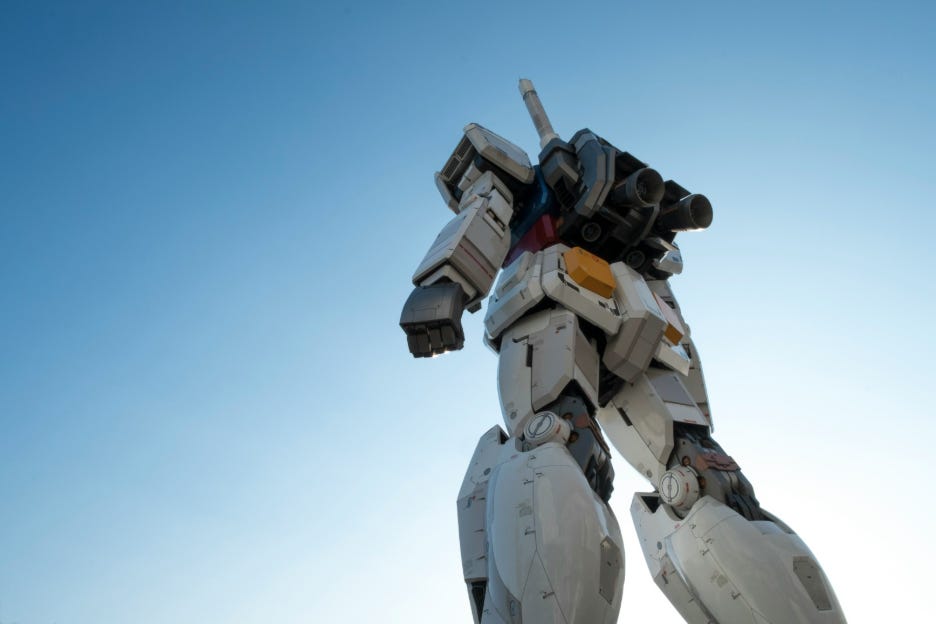
Photo by Pat Krupa on Unsplash