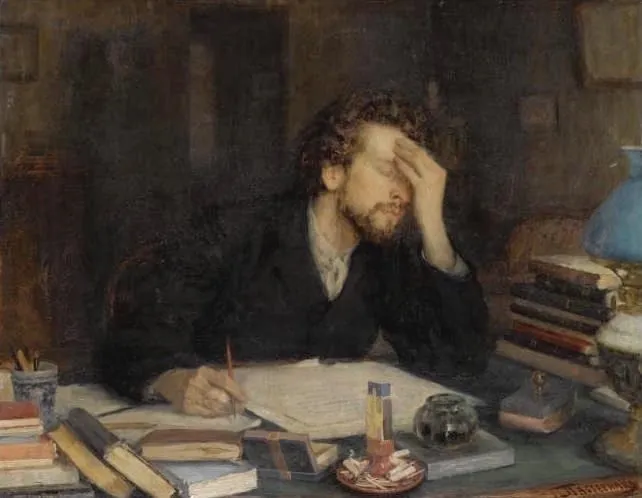
We Poets in our youth begin in gladness;
But thereof come in the end despondency and madness – Wordsworth, Independence and Resolution, Stanza VII
Children prove we all seek a better life. They quickly learn that walking helps them . They learn that talking gets them more. They watch their surroundings; they seek, follow and copy a mentor. And as they learn and grow, they begin to choose.
Likewise, as adults, we choose. There are times when we coast, ignoring the world around us. At other times, we are upset by what we read or hear, whether it be the lies of governments or injustices inflicted upon the innocent – and we seek to do something about it. We choose.
What kind of an Ironist are You?
Do we know why we make these choices? Maybe, maybe not. As we age, though, we all realize that we cannot do everything we want and that, eventually, our choices are irrelevant and forgotten.
At the end of Matthew Arnold’s Empedocles on Etna, the philosopher, weary of life, chooses to throw himself down into the “vomiting flames and smoke” of Mt. Etna. As he dies, Callicles, the harpist sent to calm him, sings a song with the promise of the power of poetry, and it is carried up to Mount Olympus to the gods by the “rushing smoke-bursts” of red flame. It’s a powerful scene. We are left thinking that while life is transitory and tragic, it possesses the possibility of creating great and lasting art. There can be purpose. On another level, we are left wondering if we are hearing in Empedocles’ suicide Matthew Arnold’s own corrosion of faith, as expressed in his personal life and in poems like Dover Beach. Art is imitating life.

Speaking of choice, Hamlet struggles whether to act when he is confronted with “the slings and arrows of outrageous fortune.” Indeed, in Hamlet, we may even underestimate the ghost of Hamlet’s father. The spectre may indeed know his son well and may enjoy the fact that his indecisive son is brooding and worrying Claudius by his gloomy and threatening presence. This would be a satisfying revenge for the ghost. Or is it Shakespeare that is aware of Hamlet’s distracted mind? So perhaps it is not really Hamlet waiting, but Shakespeare who delays? Yet Hamlet has indeed changed; Ophelia thinks he has…poets reach a little beyond themselves – great ones, very far.
This is irony. Irony is a different perspective. Charles Williams, a member in the Inklings with C.S. Lewis and Tolkien, said it was the ironist who realized the tragic nature or life and yet could find joy and humour in it – that irony is a powerful tool to deal with life’s challenges. My friend Reid Nelson Wightman noted how this description by Williams, in effect, meant the joke had been on him all his life – and the response was to be free and delighted. Williams even called that man that could do this the “defeated ironist.” That’s clever.

The Greeks said, “Know thyself”. But can you, really? Perhaps not, but irony can help give you a better life. Art assists experience. Art provides images. Poetry, as an art, teaches and delights. It leads to a better place. To understand the poet (or your life, or other people) you need to understand what the poet does – the different angles you need to consider.
In a sense, you must become a different person. We are separating ourselves from ourselves. We are growing, learning, understanding another perspective. We transcend what we were – in a sense there is “a willing suspension of disbelief”. We consider views outside of ourselves – and thus we look back, see ourselves, and know ourselves better. Irony is a tool to better yourself.
When you are a poet, you are not the poem or the poet in the poem. You are removed. You are trying to be the poet. This is someone you are not. You are someone else. We are less of the poet and more of the work. We began above with a quotation from Wordsworth’s Independence and Resolution, and the poem ends after he meets an old and poor leech-gatherer who teaches him “…human strength, by apt admonishment”. We learn when we choose irony.
And the same can be said of you, my friend, as you go about your daily life. Yes, Ruth, you can escape the sad heart, sick for home, standing amid the alien corn. With a wee little dose of irony.