Sea: The Oldest Ironist

Aashisha traces writers’ obsession with the oldest ironist of all — the boundless, beloved, and beautiful sea.

The sea is a fascinating concept, not only because water makes up three-fourths of the planet as well as the human body (thanks, fourth-grade writer mind) but because it is timeless. Literally without time. Sure, the creatures of the sea probably have kept time and evolved from the shapeless amoeba to the first trilobites and jellyfish for over 3.5 billion years before land even came into the picture around 500 million years ago. But the sea is the real Khaleesi, endlessly commanding, inspiring writers since forever. Was it Homer who first set Odysseus adrift on the waves? If you are wondering why the literature writer is suddenly turning to the history of the earth, wait. I have some books from my library to prove my point.

When Ahab chases Moby Dick, he thinks he’s defying God, fate, or the monstrous indifference of nature. But Herman Melville assiduously implies through pages and pages of prose and reverence for the white whale that what Mr. Ahab is really defying is his own smallness.

“All visible objects are but as pasteboard masks.”

His harpoon pierces through the mask and hits water. Does the sea care? It never has. It never will. And the longest existing sea creatures have absorbed a little of its nature. They too are oblivious. And in their oblivion and indifference, they win by default.

A century later, Ernest Hemingway’s Santiago goes out to sea to prove his vitality. The sea is his last sparring partner, and like all sparring partners, it teaches through defeat. When the sharks strip his marlin to bone, Santiago tells himself,

“A man can be destroyed but not defeated.”

The line is meant to sound triumphant, but it isn’t. It’s a line of exhaustion and acceptance. Typical humans congratulating themselves for losing beautifully. The sea (what an ironist, by the way) lets him live just long enough to make that speech.

What kind of an Ironist are You?

Take the quiz and find out.

Then there was Virginia Woolf, listening to the steady wash of waves outside the Ramsays’ summer house in To The Lighthouse, writing “The sea without a stain on it like a mirror reflecting the light of the sky,” even as Mrs. Ramsay fades and the house collapses into dust. The waves keep washing over the land, indifferent to war and death, absorbing love and loss. Like time itself, tireless and unjudging, stripping memory clean.

But we rarely like the sea’s blankness or the fact that it couldn’t care less. We try to put meanings on it, assigning it moods (angry, calm, fickle, maternal) and build metaphors out of it: the sea of love, the sea of faith, the sea of despair. We pretend it teaches us lessons. The sea, though, keeps doing what it has always done: rise and fall, devour and forget.

Matthew Arnold, watching the waves of Dover Beach, heard in them “the eternal note of sadness.” He thought the retreating tide of faith was humanity’s tragedy. It probably is. Or, at least, it mocks our desire for permanence with its own endless repetition. It feels like the most consistent inconsistency on earth.

Writers have treated the sea as both a stage and a confession booth. Melville’s Ahab rages across it, Woolf’s Ramsays sail toward it, Hemingway’s old man rows into it with weary defiance. Each believes the sea offers something – truth, peace, absolution – but each finds instead an echo of their own restlessness. The sea, in fact, is so overwhelming that leaders have barely tried to conquer it. Instead, they try to wage wars on its much younger and far weaker sibling, the land. Writers like me shall wait for the day humanity tries to overtake the sea. That would be an interesting battle to witness.


Contributed by
Aashisha

Author

  • Aashisha Chakraborty

    Author of ‘Mis(s)adventures of a Salesgirl’ and ‘The 13-year-old Queen’, Aashisha moonlights as a marketing strategist and content professional. A computer engineer and MBA with 8 years of marketing experience and a globetrotter with 30 countries stamped on her passport, she is currently working on her third novel and a collection of free verses. She trusts Charles Bukowski when he said,"Some people never go crazy. What truly horrible lives they must lead." Connect with her @aashisha_themindbin on instagram or visit her at www.aashisha.com.

More Irony

Miscellaneous Ramblings #9 – Part 1, Recognizing Evil

Miscellaneous Ramblings #9 – Part 1, Recognizing Evil

“The line separating good and evil passes through every human heart.” Aleksandr Solzhenitsyn, The Gulag Archipelago I was in Budapest when I heard about the mass shooting at Tumbler Ridge, British Columbia. One of the worst things about this horror is how quickly it...

RETVRN to Casablanca

RETVRN to Casablanca

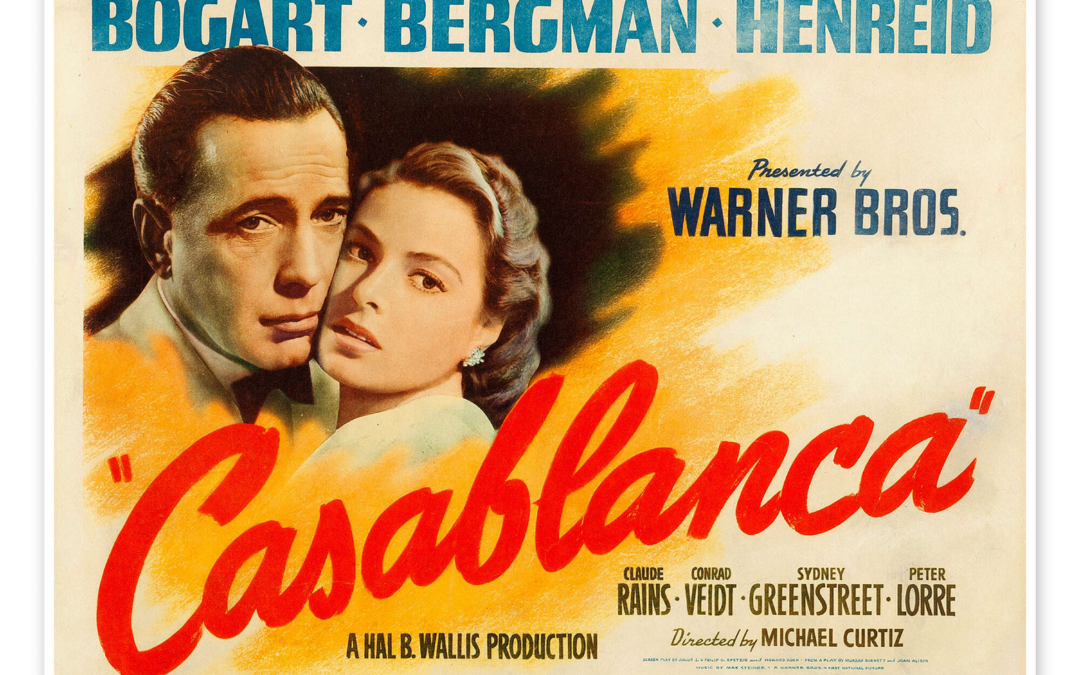
The inconvenient Liberalism of a "traditional" classic “I’ve often wondered why you don’t return to America.” When the French police chief says this to Rick, we learn he’s an exile. We never learn why, but we get hints of communist leanings. “You ran guns to Ethiopia....

The Reading Chair: Falling in Love with The Sirens of Titan

The Reading Chair: Falling in Love with The Sirens of Titan

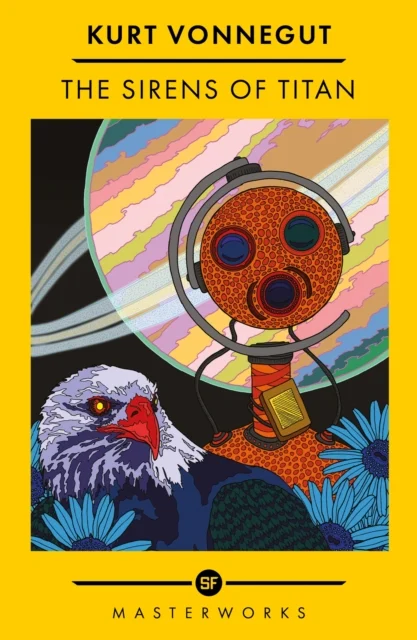
…and the Joke That Explains Everything “A purpose of human life, no matter who is controlling it, is to love whoever is around to be loved.” Famous words by Malachi Constant, the man who gets rich by chance and ends up in space by chance, feels extraordinarily deeply...

The Zambian Dream

The Zambian Dream

Kachingo Sondo is a corresponding freelancer originally from a village outside of Garampande, near Livingstone, Zambia. Zambian village, by Tom Chiponge, Pixaby Call me Phiri. I drive a taxi in Lusaka. That is, when I have money, I rent a taxi to try and make more...

Air: The Fourth Elemental Ironist

Air: The Fourth Elemental Ironist

The final one in the Ironist series - air - the silent carrier of truth, lies, and everything in between. Today, we conclude the Ironist series on the fourth element - air. Invisible, omnipresent, and so essential. Moving through us without fanfare. We inhale it,...

The Angel of the Archive: The Synod of the Left Shoe

The Angel of the Archive: The Synod of the Left Shoe

Jonathan Bennet talks about surefooted stances in the world of shoes and the not-so-surefooted stances of those who argue about them. Among the lesser church councils of the thirteenth century—those trivial, haphazard regional gatherings of abbots and prelates...

Earth: The Third Elemental Ironist

Earth: The Third Elemental Ironist

Welcome back to the Ironist series. Today, we delve into the third ironist – the earth, humble but powerful. Having absorbed human ambitions with geological patience, it has witnessed empires crumble to dust, ideologies sink into nothingness and kingdoms pass like...

The Irony Club

The Irony Club

Can't get enough of irony, can we? So, we created a club. Welcome one and all! We would like to thank you for subscribing to The Ironist and for your kind encouragement over the past two years. It has meant more to us than we can easily say. As a result, we have some...

Say Not, “the Struggle Nought Availeth.”

Say Not, “the Struggle Nought Availeth.”

The new year is here... As the year turns, I find myself thinking about what we carry forward and what truly matters. The grand sweep of The Lord of the Rings enthralled me in high school. I had read it two or three times by the time I reached university. It was the...