Peter Scotchmer writes a short story on how love sees truth even when the eyes refuse to.
Near the beginning of the semester, Rebecca Cooper, slim, blonde and beautiful, stood somewhat shamefacedly before her teacher’s desk after class, self-consciously twisting an elastic band in her hands.
“I’m not very good at English,” she said. “I thought you should know. I have a sort of mental block about it. I wish I didn’t, but it’s always been there. I don’t know why.”
On the eve of his first Parents’ Night, Dave Hartley looked up at her and smiled reassuringly. He had become used to all sorts of unexpected confessions from students during his brief tenure at this school for the arts, such a change from the public schools he had taught in for decades.
“It’s probably because I am a perfectionist,” she continued. “If something doesn’t come naturally to me, I get a complex about it, and then get very nervous, and then think I can’t do it.”
“Well, if you’re right about that, you show an extraordinary degree of self-knowledge, which is a rare commodity in itself, and an enormous asset in life. If you’re wrong about it, I can help to give you confidence in your innate ability.” Dave smiled again. “But thank you for letting me know. Let’s see how you make out with your first assignment, and then we’ll talk about it. I’d better get ready for Parents’ Night. Don’t miss your bus now.”

Rebecca nodded her thanks with a sad smile as she left, and Dave prepared to meet the parents. Perhaps, he reflected, she was alerting him to her fear of the possibility of some sort of confrontation with her own parents. There were, he knew from experience, some ‘helicopter parents’ whose misplaced concern for their offspring amounted to damaging interference, but so far he had not met any at this school. In fact, he was delighted with the place. The parents he had met were supportive and encouraging; the students almost without exception articulate, polite, motivated, and talented. It helped, of course, that each one of them had won admission to the school by way of a successful audition to study music, art, drama, dance, or literary arts. In short, they wanted to be there, despite having to take a regular complement of academic courses in addition to their specialization, which made for a crowded curriculum and a heavy workload. Rebecca was, he knew, an aspiring violinist, and her parents both came from musical families.
Rebecca’s parents did not appear, but those who did, like their offspring, were punctual. Civilities and smiles were exchanged, and Dave reflected how fortunate he was not to be back at Mike Harris High where teachers and parents were herded into the echoing cafeteria and embarrassingly acrimonious disputes could all too easily be overheard. Poor Diana Cartwright, he mused: she always had long lines of impatient parents waiting to berate her for her high standards and low marks; George Dunn, by contrast, gave out high marks and had no complaints, only compliments on his expertise, as if these marks were due to his exemplary teaching rather than to his dishonesty in inflating them all. In between interviews, Dave reflected with wry humour on some of his own more memorable encounters with parents in the past:
“You can hit him if he doesn’t behave. I do,” Mr. W. had told him even after Dave had assured him that parental permission would not exonerate a teacher from criminal charges if he did.
“Well, if he lost it, it must have been a bad book,” was the rejoinder from a pettish Mrs. R.
“You accused my son of pragmatism!” accused a vehement family physician, to whom he had had to explain the difference between two words he had confused: pragmatism with plagiarism.
“I’m here for the extra four marks,” announced the accountant father of a girl who had failed Grade 11 for the second time with the identical mark of 46, to which Dave had responded by asking him if he ever fudged his figures, in reporting income, for example. “Neither do I,” replied Dave.

At a sound from the door, Dave looked up from his desk. A lady latecomer, tall, grave, stooped, elderly, knocked gently.
“I am not disturbing you?”
“Not at all. Please come in.”
“I am Lotte Visser.”
The name meant nothing. Dave must have looked puzzled.
“Hansie’s grandmother.” A blank look from Dave.
“Oh, I am so sorry. That is what I call him at home. It is a nickname.”
“And his real name is— ?”
“Yes, of course. His mother called him ‘TJ’ for Tomas Johannes, but I don’t like thet.”
“You don’t?”
“ I am Sath Efrican. Dutch Reformed. An Efrikaner. His mother is my daughter.” She put a confiding hand on Dave’s arm, as if to reassure him out of his perplexity. “He is a person, not an ecronym. Corrie called him TJ because she liked ‘rep.’ Bleck music. It demeans women.”
“Oh, you mean ‘rap’ music? Hip-hop?”
“It is the same. My daughter is… a disappointment to me. She had him out of wedlock to spite me. She was always uncontrollable. She had an affair with a bleck. You must see he’s of mixed blood parentage.”
“It is increasingly common nowadays.”
She set her jaw in silent humbled assent. She sighed. “You see, he is a good boy. My daughter left him with me and my husband to raise, and then she went off. I am now 78, and a widow. Corrie has been in and out of drug addiction programs for years. And with many men. She sends Hansie a birthday card once a year—if she remembers. He never knew his father. I want what is best for him, in spite of the shame. But he is very lazy. It is in their blood, you see. Idle, lazy, no matter what their potential. They can’t help it. It is not their fault.”
TJ Pownall, the Hansie in question, was a dancer, and also in Dave’s Grade Twelve English class. He was kind and thoughtful, scrupulously polite, and popular with the girls, especially Rebecca Cooper, observant, but reticent in class. He was certainly not lazy, but almost too anxious to please. Dave liked him very much. So this was his grandmother. Dave knew he had to be diplomatic. Teachers met all kinds of people.
“You surprise me. He is a good student. I have not noticed any laziness in him at all.”
She sighed again. Such incomprehension of the obvious was evidently a frustration to her. “That is what all his teachers say. But blood will out. You’ll see. It always does. In the end.”
“I understand he is a very good dancer.”
“Mr. Hartley, what good will thet do him? What sort of job will he get with it?”
“He is surely in this school because his talent was obvious. Perhaps he will surprise us all. Maybe in time he will do something else for a living. My own son told me when he was a teenager that he wanted to be an actor.”
“And what did he become?”
“A lawyer, which in a courtroom is a place where he can be one. As a teacher can in a classroom.”
“Excuse me, Mr. Hartley, but is his mother bleck ?”
“No, but what does that have to do with it?”
“You will see. But we will just leave it at thet. For the moment,” she hinted darkly.
“I will be sure to tell you if I see any reason for concern about TJ’s—Hansie’s—progress. As you said, he is a good boy. I don’t think he will let either of us down.”
“So you met the racist grandmother,” said Ace Jeffries, the gym teacher, puffing after their morning run.
“A racist or merely eccentric. But her background is rooted in the apartheid attitudes of her homeland, and she brings those prejudices with her, as we all do with our own. Did she really raise the lad for eighteen years by herself?”
“Yup. Husband died, she said, back in Pretoria, of the shock of his grandson’s race and illegitimacy. Yet she obviously dotes on him. Can’t do enough for him. You know she is a potter? How she manages to make ends meet, I don’t know. Not much call for pots.”
“Not too much self-knowledge, then?”
“How do you mean?”
“Doesn’t see the paradox of her support for an exclusionary ideology at variance with her Christian convictions.”
“Come again? In English this time?”
He tried again. “She doesn’t see that her blanket dismissal of an entire race is unfair… and unchristian, yet she makes an exception for TJ, in spite of his parenthood. And proves to be a loving grandmother in the process.”
“That’s curious for sure. Isn’t love blind?”
“That’s what they say, yes. Perhaps it’s just as well…”
In the carpeted drama studio a week later during a discussion of Sophocles’ play Oedipus the King after they had read it, Dave drew the class’s attention to the importance of self-knowledge.
“Oedipus does not know who or what he really is. As we have seen, he is proud of his achievement in freeing the people of Thebes from the ravages of the Sphinx. He is clever and shrewd and selflessly generous, but he knows too little about himself, knows nothing about his own inner life: his impulsiveness, his quickness to anger, his lack of self-control. It is always hard to acknowledge a painful truth. Few people want to admit their faults. Oedipus has the hubris, the self-assurance and arrogance of the powerful, and as you saw, he unwisely disregards the advice of the prophet Teiresias, whom he condemns and threatens with violence. It simply does not occur to him that Teiresias is telling the truth: it is Oedipus himself who is the reason for the plague that is now afflicting the city. It is he who has killed a man who turns out to have been his father, and then fathered daughters unknowingly with a woman who is his mother. The shock of the discovery causes him—remember—to blind himself as his own punishment for his crimes. Now he is blind, but ironically sees himself clearly. “Know thyself” was a Greek maxim honoured by Socrates himself. Let us re-read aloud the climax of the play from the point when he makes his terrible self-discovery, when he acquires self-knowledge. Who wants to be Teiresias?”
Dan Davies was a creditable Teiresias, defending himself with wounded dignity against Oedipus’ furious accusations; Queen Jocasta was played thrillingly by Joy Halsall, a charismatic drama student; and Isolde Schick was a sonorous Chorus, commenting sorrowfully on the unfolding tragedy, but it was the performance of the blinded and humbled King Oedipus who electrified the class as he emerged from the wings, eyeless sockets streaming blood, outstretched arms groping the empty air as he sought a final embrace from Ismene and Antigone, his daughters, who were also his sisters. “O children!” he called in a husky voice laden with doom. “Where are you? Come here, come to my hands, a brother’s hands which turned your father’s eyes, those bright eyes you knew once, to what you see now: a father seeing nothing, knowing nothing, begetting you from his own source of life!” Hansie (‘TJ’) Pownall as Oedipus continued in a voice shaking between sobs of anguish, “Then who will marry you? No one, my children; clearly you are doomed to waste away in barrenness unmarried.” Hansie was Oedipus. “Do not take them from me!” he cried pitiably as Ismene and Antigone were led away. When Isolde as the Chorus in a sombre voice delivered the play’s final warning, “Count no mortal happy till he has passed the end of his life free from pain,” the class was held in awed silence until it was broken by the sound of stifled weeping at the back of the room only seconds before the bell rang. It came from Rebecca Cooper as Antigone, the girl who said she was “not very good at English.”

During animated class discussion of the play next day, TJ uncharacteristically broke his customary silence with a highly personal admission. “I never knew my father. He never knew me. I don’t even know if he is still alive. I don’t know my mother, either. All my life I have wondered who I am. This old play speaks to me.” There was a respectful silence until TJ broke it again. “Barack Obama was abandoned by his dad,” he said in a somber voice. “ I read his Dreams from My Father, about his search for him, in Africa. He did not like what he found. Sometimes, it is better to be ignorant than to know the truth. Don’t they say love is blind? It sure was for Oedipus.”
“Thank you, TJ,” said Dave. “That was very moving.” A murmur of approval ran around the room. Rebecca Cooper, sitting on the floor next to TJ, put her arm around him. He patted it and smiled at her.
In the weeks that followed, Dave saw the two of them together a great deal, always in earnest conversation, once hand-in-hand. He often wondered what became of them when they all went their separate ways at semester’s end. He himself left the school at the end of his secondment. Rebecca, it was said, became a violinist, moved to Stockholm and married a banker. She was to name her first child Thomas John. Dave ran into TJ on a cold winter’s day at a convenience store when he went in to pay at the counter for his gas. TJ recognized him at once. “Yes, I work here to pay my way through college,” he said. “I’m doing my master’s in social work. I used to work with addicts and juvenile offenders, but now I’m training for what they call ‘family re-integration’—it seems more encouraging. But I’ve never forgotten Oedipus, sir, or the way you taught it. ‘Know thyself’—it’s a life lesson, isn’t it?” His eyes eagerly sought confirmation.
“It certainly is. Getting to know yourself is a lifelong task. Some people never make the effort or see the point. But I’ve never forgotten your starring role in the cameo. It was powerful stuff.”
“Yes. It was,” he agreed with emphasis. “But your explanations made it all so possible.”
“You’re too kind. You were a wonderful class.…. By the way, is your grandmother still alive?”
“Sure is. Still spry at 88! And now my landlady!” He laughed. “Oh, don’t forget your change!”
“Thank you. All the best to you. I know you’ll do well. You always did. Remember me to her, won’t you? The little blue pot she gave me back then is in an honoured place at home.”
“Sure thing. And thank you for what you did for us, sir—for me and for Rebecca!”
Dave nodded, smiled, raised a hand diffidently in a farewell to hide eyes brimming with unexpected tears, and left the store. It was nothing, really, he told himself. I just did the job I was trained to do. But it’s a marvel when the legacy far outweighs the effort expended…

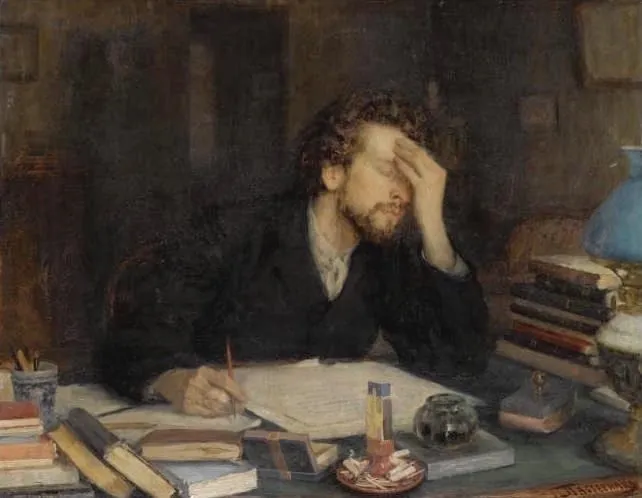
Please Note: The images are AI-generated.
–
Peter A. Scotchmer, Ottawa, Jan.9-11, 2019