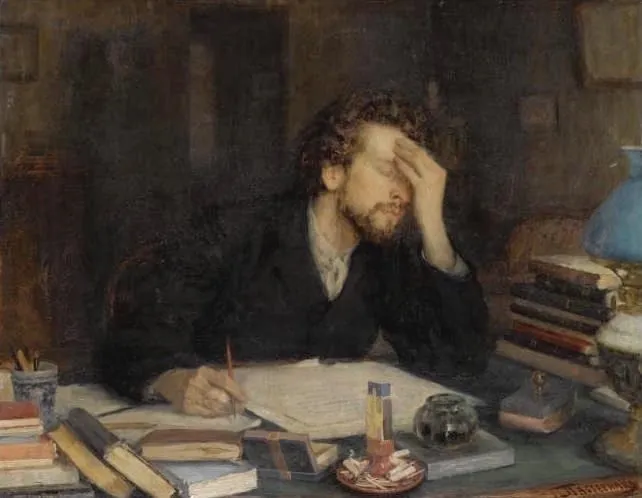
Forget “live-to-work”. The ancients believed leisure—not work—was the highest purpose of human life. In this essay, Jonathan defends self-cultivation through art, conversation, and exploration.
“One ought, every day at least, to hear a little song, read a good poem, see a fine picture, and, if it were possible, to speak a few reasonable words.” — Goethe
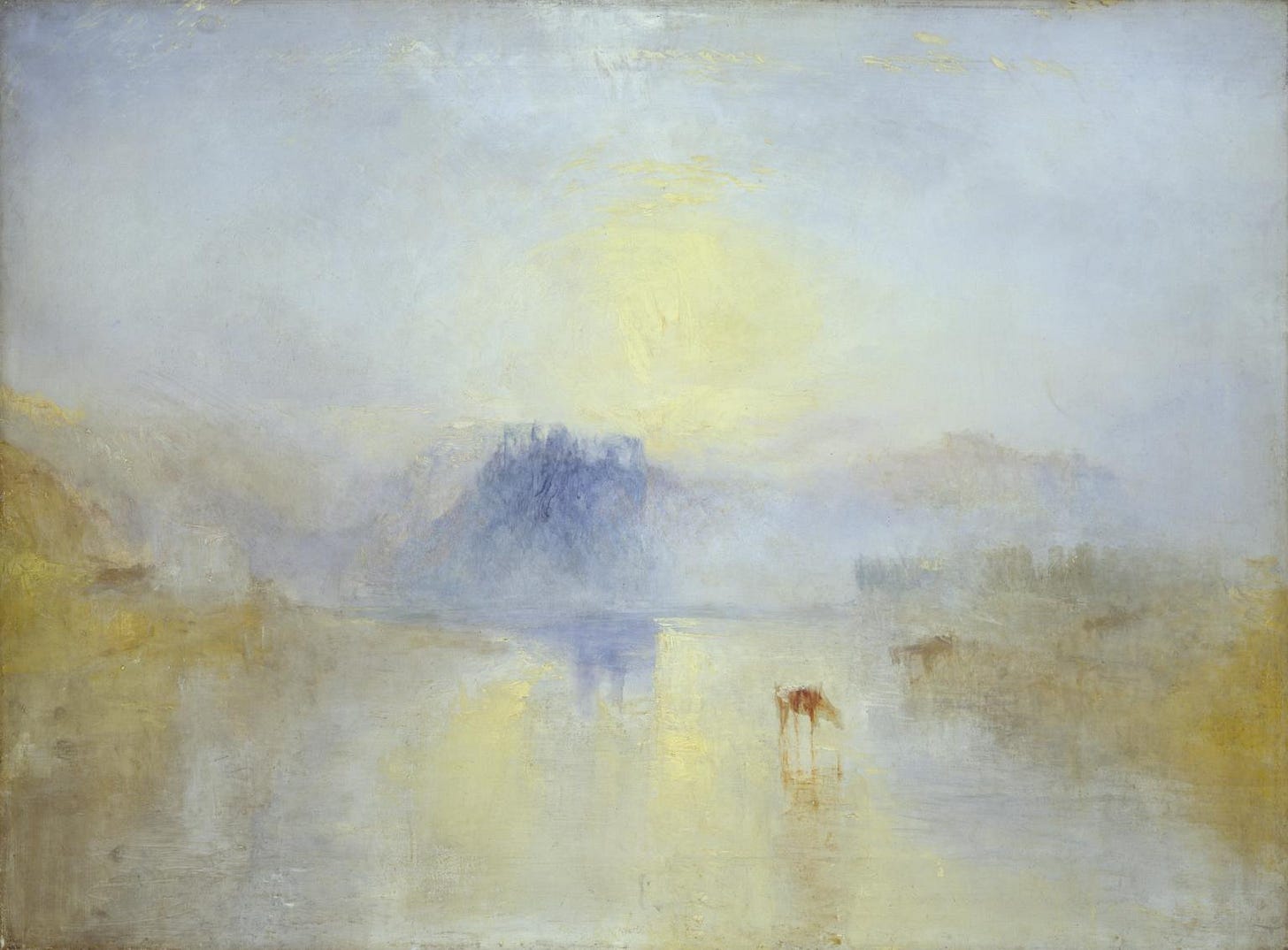
Norham Castle, Sunrise. J.M.W. Turner, public domain
The cliché is that “you can’t take it with you.” A truism trotted out at funerals, or by financial advisors trying to sell you retirement products. Yes, work and success matter. Family matters. Even legacy matters—though in a century’s time, unless you happen to have founded a dynasty, discovered a planet, or assassinated an emperor, the last lingering memories of you will vanish with the efficiency of a hard drive wipe. Probably sooner, given the speed of humanity’s collective forgetfulness.
And yet we spend most of our lives frantically labouring as if history itself is on tenterhooks waiting to see what we’ll manage to file before the deadline.
People sometimes ask me why I travel to strange corners of the earth, or why I spend hours reading on topics with no bearing on my work—say, Byzantine mysticism or the finer points of Armenian viticulture. The polite answer is curiosity. The longer, more honest, one is that life, as many wiser than me have observed, is a preparation for death. Philosophy, said the ancients, is the art of dying well. And in the meantime, there are oysters to be savoured and ruins to be explored.
The Greek Case
The Greeks had a word for leisure: scholē (σχολή). It doesn’t mean “lying on the couch with Netflix” (though one could imagine Plato’s horror at the algorithm). It meant a higher, almost sacred condition—freedom from necessity, the space to cultivate the faculties of the mind, to reflect, to converse, to listen to music that wasn’t just background noise. It was the ground of philosophy itself, hence the fact that “school” descends from scholē.
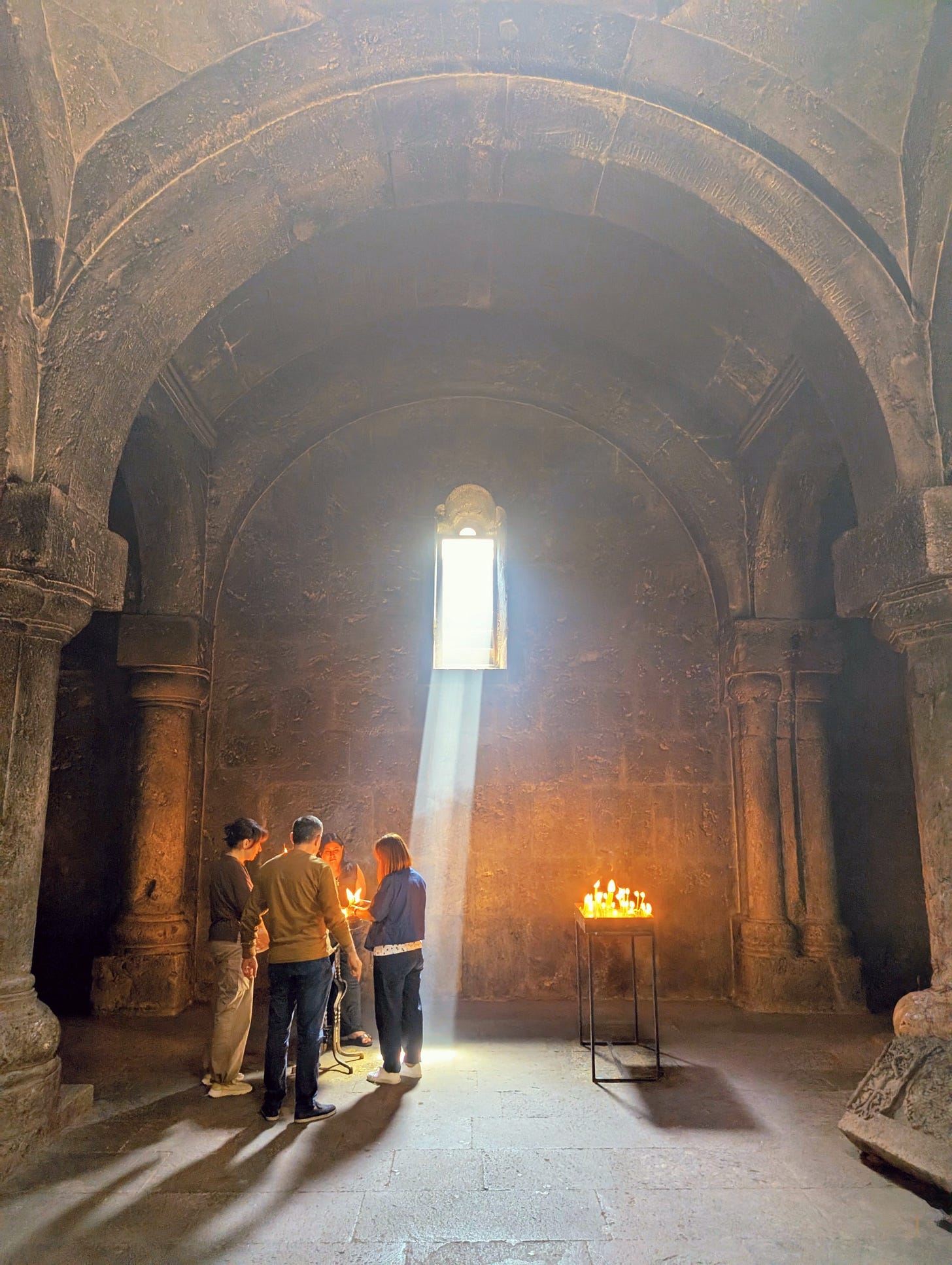
Call it prayer, or simply the discipline of standing still
Aristotle was blunt about it. Work, he said, is necessary, but only in order to make leisure possible. Culture, happiness, and human flourishing (eudaimonia) spring not from endless busyness but from time free of busyness. In leisure, the philosopher contemplates truth; the citizen engages in civic virtue.
Labour (ponos) belonged to necessity and drudgery. Leisure, by contrast, belonged to freedom (eleutheria) and the life of the mind (nous). The enslaved worked; the free cultivated themselves. Snobbish, yes—but at least the Greeks admitted openly that work was not the highest end of man.
And for the Platonists and Pythagoreans, leisure reached into the divine. Contemplation (theoria) was not an idle pastime but a way of aligning the soul with cosmic order. To sit quietly, to think, to gaze upward—this was closer to the sacred than building another aqueduct. Monasticism carried forward these ideas into the Christian worldview: leisure not as idleness, but as holy freedom for prayer, contemplation, and the cultivation of the soul.
The Modern Inversion
How far we’ve fallen. Today leisure is tolerated only if disguised as “recharging for work,” like plugging in a battery. Rest is valuable only if it produces more productivity later. Imagine telling Aristotle that the purpose of contemplation was to become more efficient at data entry. He would have laughed us out of the Lyceum.
Worse, the individual has been forgotten and replaced with the many. It is proposed that everyone needs to “recharge” their batteries en masse. And this is not an intellectual process, but literally the couch, a cruise, or some sport. No intellectual—let alone spiritual—dimension is considered. This collectivization is continued into the apotheosis of work itself. Not only is the individual forgotten, the actual idea of work itself has become the goal of life
Work cannot be an end in itself. Building a family is noble. Providing is necessary. But without self-cultivation—learning, travel, memory, art, friendships, songs, even the odd shellfish—life risks becoming little more than a résumé with an expiry date at the bottom.
A Modest Proposal
So perhaps the defence of “laziness” is really a defence of humanity. Of the idea that life should not be consumed entirely by the demands of necessity, but opened toward the superfluous: music, books, pictures, words. That we should live not only to labour but to enjoy, to grow, and to wonder. To develop and cultivate our intellectual and spiritual faculties—whatever we may conceive of these to be.

Scholē, in fortified form
As a chef by profession, I cannot help but think of the late Anthony Bourdain, who lived as though leisure and self-cultivation could be plated, eaten, and washed down with a classic cocktail. Not that I’m remotely in his league, but the man had a way of distilling philosophy into an evening on the town. Let me end with his words, a paean to scholē in the guise of a good night out:
“Eat at a local restaurant tonight. Get the cream sauce. Have a cold pint at 4 o’clock in a mostly empty bar. Go somewhere you’ve never been. Listen to someone you think may have nothing in common with you. Order the steak rare. Eat an oyster. Have a negroni. Have two. Be open to a world where you may not understand or agree with the person next to you, but have a drink with them anyways. Eat slowly. Tip your server. Check in on your friends. Check in on yourself. Enjoy the ride.”
What kind of an Ironist are you?
-Contributed by
Jonathan Bennett