Continuing his reflections on the great meals of history and literature, Jonathan Bennett recalls a feast where appetite became an instrument of power.

Joseph Vissarionovich Stalin enjoyed his food. By the time of his death in 1953 he had grown stout enough that the undertakers at first failed to recognize their deceased leader. His appetite was broad, his palate traditional—he liked rich, simple dishes executed to perfection, served in abundance, and presented with ceremonial precision. Yet even at the dinner table, as in every other sphere of his life, appetite served authority; every meal was also an exercise in control.
Even the privations of the war and German armies pressing to the very gates of Moscow did not halt the cycle of Kremlin banquets. Between 1941 and 1945, a total of twenty-two were held—every one but one hosted by the Comrade General Secretary himself. Menus showcased the culinary length and breadth of the Soviet empire. When Winston Churchill visited Moscow in August 1942, a shashlik made from a two-week-old lamb fed only on its mother’s milk was prepared according to a special Georgian recipe expressly to impress Britain’s most famous gourmand. Churchill, delighted, praised it highly—along with the opulence of the silverware and china. The Red capital might have been under siege, but dinner remained a matter of state.
What kind of an Ironist are You?
Stalin also enjoyed his drink, though his reputation as a prodigious boozehound has often been exaggerated. Georgian wines were his true preference, and vodka, though omnipresent, was largely for others. Both at the grand state feasts and at the smaller suppers held in his Kremlin apartments or at his dachas, guests were encouraged—meaning obliged—to drink to excess. The ritual of receiving and giving toasts was a form of political theatre: a test of loyalty disguised as conviviality. Those who got so drunk they fell from their chairs or made fools of themselves were liable to be singled out for ridicule by the Boss, who prided himself on maintaining control while others lost theirs.
His composure at the table became legendary. At the 1939 banquet celebrating the Molotov–Ribbentrop Pact, a German delegate observed that while everyone drank to each toast from communal bottles of vodka, Stalin’s own glass was refilled from a personal decanter kept on a sideboard behind him. After the meal, curiosity overcame discretion: the guest sampled it and found only a watered white wine. The Georgian fox could thus drink anyone under the table—simply by barely drinking at all.
At Stalin’s country dachas, the tone was looser but the danger no less acute. Stalin’s kitchens were run by his childhood friend Alexander Egnatashvili—who tasted every dish for the ever-wary leader—with the future Russian president’s grandfather, Spyridon Putin, serving as chef beneath him. The dinners for his inner circle were dominated by Caucasian dishes: spicy lamb stews, khachapuri, pickled vegetables, and platters of grilled meats, washed down with copious amounts of booze. He was known for cruel practical jokes on his guests—of the “ha-ha, I poisoned the soup” variety—while men who inspired terror in their own subordinates—Beria, Malenkov, Khrushchev—were made to sing, dance, and caper for his amusement. These dinners were often followed by screenings of American films (westerns being his favourite) well into the early morning hours. It was following one such evening, at his Kuntsevo dacha, that Stalin was struck down by the cerebral hemorrhage that would kill him.
One banquet stands above the rest: 24 May 1945, the victory reception for the commanders of the Red Army and Navy. The marble-and-gilt Georgievsky Hall of the Grand Kremlin Palace was set for roughly three hundred guests—front commanders, party brass, and Stalin himself presiding, with Molotov as toastmaster.
The banquet began with a parade of zakuski (cold hors d’oeuvres): beluga caviar, cured salmon and belorybitsa, pickled herring with garnish, Caucasian cheeses, charcuterie, rasstegai (fish-stuffed pastries), suckling pig, Olivier salad, and assorted pickled vegetables. Then came the hot courses: porcini mushrooms in sour cream, clear consommé and chicken cream soup, boiled nelma and sterlet in champagne, followed by roast turkey, spring chicken, and hazel grouse, with asparagus mousseline.
Dessert offered chocolate parfait, petits fours, roasted almonds and fresh fruit. The tables glittered with bottles of every sort: vodka for toasts, Georgian wines for the meal, champagne flowing from start to finish, Starka for the hardier souls, and cognac with dessert—doubtless, the famed Armenian Ararat Dvin Stalin himself was so fond of.
The night reached its climax with Stalin’s “Toast to the Russian People,” a rare moment of humility in which he publicly admitted to mistakes made early in the war. Yet when the evening ended, few recalled the food. What remained was the grandeur, the relief, and the uneasy triumph of an empire celebrating victory beneath the unblinking gaze of its master.
For Stalin, dining was never merely about sustenance or celebration—it was a mechanism of control. The banquet table was his throne room, the meal a ritual of dominance in which the act of breaking bread masked the constant possibility of betrayal. To dine with Stalin was to perform a feat of loyalty under the scrutiny of a man who never truly ate or drank without calculation. Every toast was a test, every course a stage in the theater of power. And when the final glass was raised, it was always his voice—calm, amused, and unassailable—that gave the last word.

Victory Day Menu
(adapted for you and your comrades)
Zakuski
Beluga caviar, with blini, sour cream, and butter
Cured salmon and whitefish
Pickled herring garnished with slivered onion and olive oil drizzle, served with golden potatoes
Rasstegaičiki (mini fish pastries)
Olivier salad
Suckling pig with horseradish
Assorted charcuterie, Georgian cheeses, and pickled vegetables
Hot Dishes
Belye griby v smetane — porcini mushrooms in sour cream
Chicken cream soup, clear consommé, and borschok with pirozhki
Boiled nelma and sterlet in champagne
Roast turkey, spring chicken, and hazel grouse
Asparagus with sauce mousseline
Dessert and Sweets
Chocolate parfait; Petits fours; Roasted almonds and Fresh fruit
To Drink
Wines: Teliani (red), Tsinandali (white), Abrau-Durso Sovetskoye Shampanskoye Brut (sparkling)
Spirits: Moskovskaya vodka, Polish Starka, Ararat Dvin cognac
After: Coffee and tea
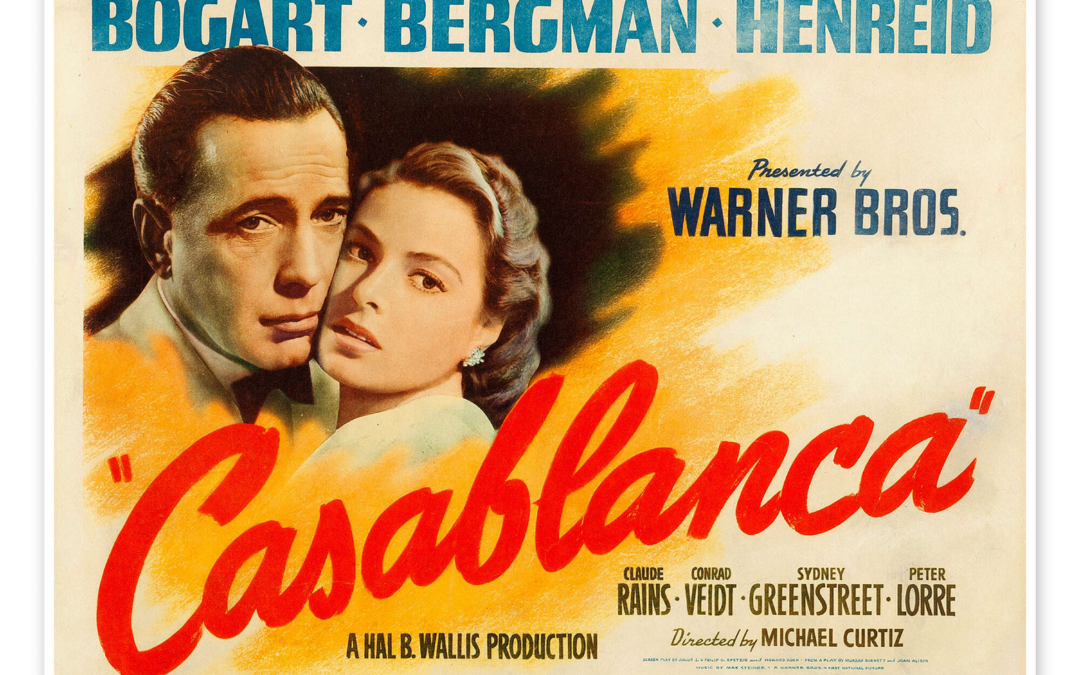
Dinner to be followed by a private viewing of Stagecoach (1939), directed by John Ford and starring John Wayne
For those curious to compare this reconstructed menu to the real deal, the complete historical menu and other information on Stalin’s victory banquets may be found here: https://www.mk.ru/social/2015/05/24/ot-salyuta-do-salata-tayny-priemov-v-kremle-v-chest-pobedy.html
–
Contributed by
Jonathan Bennett